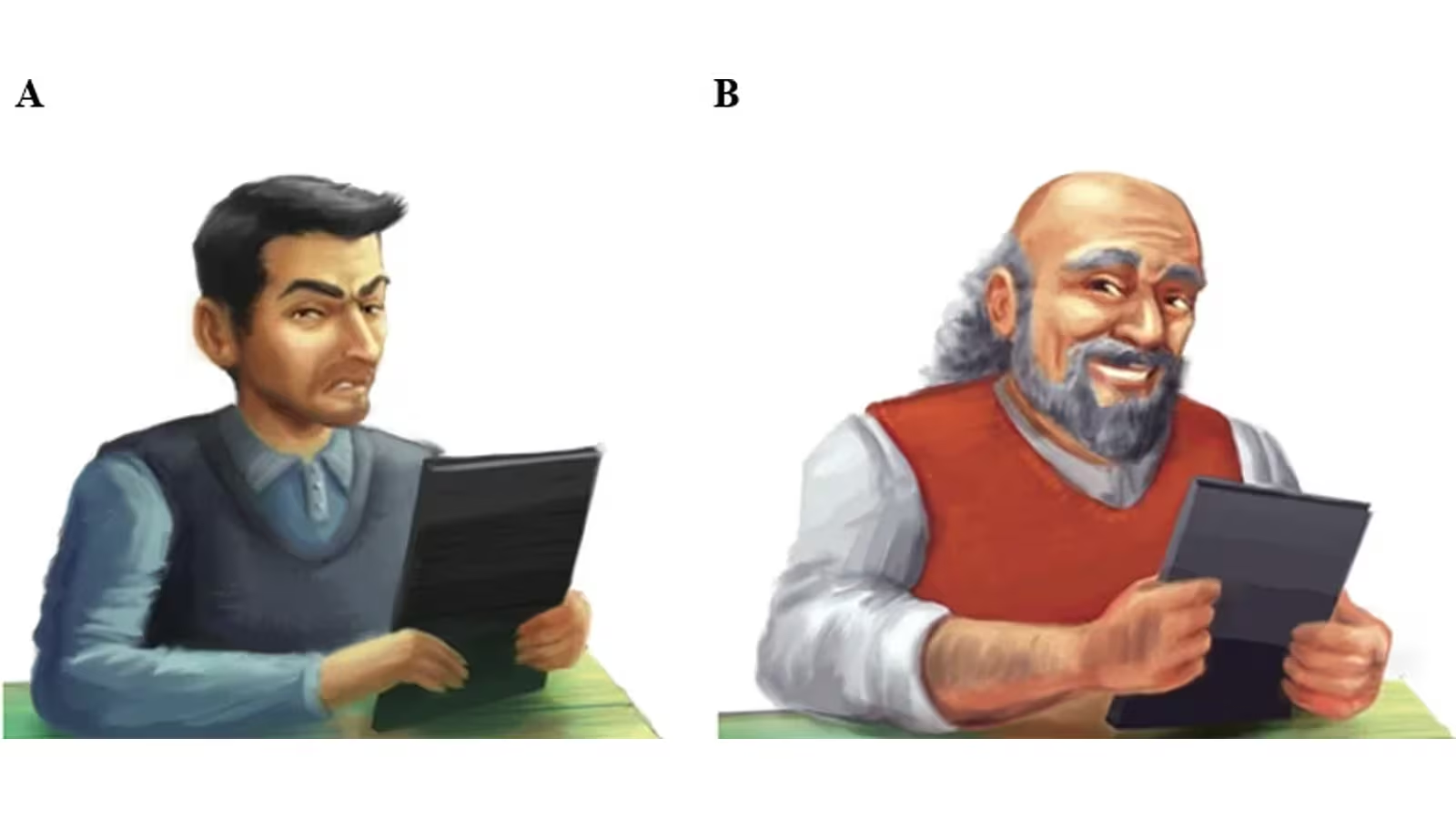
Background Traditional neuropsychological assessments often lack ecological validity and have limited sensitivity for detecting executive dysfunction (ED) in daily life. Although grounded in standardized tasks, they do not represent the complexity of real-world contexts. Serious games (SGs) have emerged as a promising approach by simulating ecologically valid environments involving dynamic, emotional, and socially embedded interactions. Objective This study aimed to (1) describe the development of a clinically oriented SG for assessing executive functioning in ecologically valid scenarios, and (2) evaluate its usability in clinical and healthy populations. Methods We conducted a cross-sectional usability study using a theory-driven SG set in a restaurant environment, developed through an iterative process based on neuropsychological theory and expert input. Participants assumed the role of a waiter and completed tasks targeting multiple executive domains (eg, planning, working memory, decision-making, contextual control, social cognition, prospective memory, and multitasking), with embedded emotional and social cues.
What the research examined
A total of 181 participants (43 with traumatic brain injury [TBI], 49 post-COVID-19, and 89 healthy controls), aged 21 to 66 years, were recruited through convenience sampling from clinical and community settings. ED was classified based on standardized neuropsychological assessment and clinical consensus involving neurologists and neuropsychologists. Usability and perceived difficulty were assessed using the System Usability Scale and Perceived Difficulty Scale. Group differences were analyzed using Kruskal-Wallis tests with post hoc comparisons, and generalized linear and ordinal logistic regression models adjusted for age, sex, and education (α=.05). Results A novel SG designed to support the assessment of executive functioning provides a more ecologically valid context than traditional neuropsychological tests. Usability was rated as good across groups, with mean System Usability Scale scores of 73.9 (SD 17.6) in TBI, 76.5 (SD 14.5) in post-COVID-19, and 81.7 (SD 13.5) in controls.
What the findings mean
Significant differences were observed across groups ( χ ² 2 =9.18, P =.01), with lower usability in TBI compared to controls. Participants with ED (n=59) showed lower usability (mean difference -8.6, 95% CI -13.2 to -4.0; P P P =.003) and higher difficulty (odds ratio 1.04, 95% CI 1.02-1.07; P P =.04). Conclusions This study presents a novel SG integrating emotionally and socially embedded tasks to assess executive functioning in ecologically valid contexts, extending prior work through the inclusion of clinical populations and real-world demands. Findings indicate good usability and underscore the influence of demographic factors. This approach enhances the ecological relevance of neuropsychological assessment and supports its application in clinical and digital health settings. Further research should evaluate diagnostic accuracy, reliability, and real-world implementation.
Study authors: Olivares D, Martínez-Pernía D, Olavarría L, Cerda M, Montenegro D, Ramírez C, Nieto R, Farías G, Slachevsky A.. This report is based on the openly licensed abstract and source record and has been formatted for newsroom reading.
JMIR serious games
https://europepmc.org/articles/PMC13520764This report is prepared from the public source listed above for news and industry-information purposes. Original research, text, trademarks and images remain with their authors and rights holders; open material is used under the licence identified by its source. Rights holders may contact rights@asiafoodtimes.com with evidence of ownership, and verified concerns will be corrected or removed promptly. This article is not investment, legal, medical or nutrition advice.