This study aims to evaluate young people's perceptions, attitudes, and behaviors regarding food waste in the North-West region of Romania. It seeks to identify key factors influencing awareness and practices, quantify the attitude-behavior gap, and propose targeted educational and policy interventions. A cross-sectional survey was conducted between July and October 2024 using a 17-item questionnaire.
What the research examined
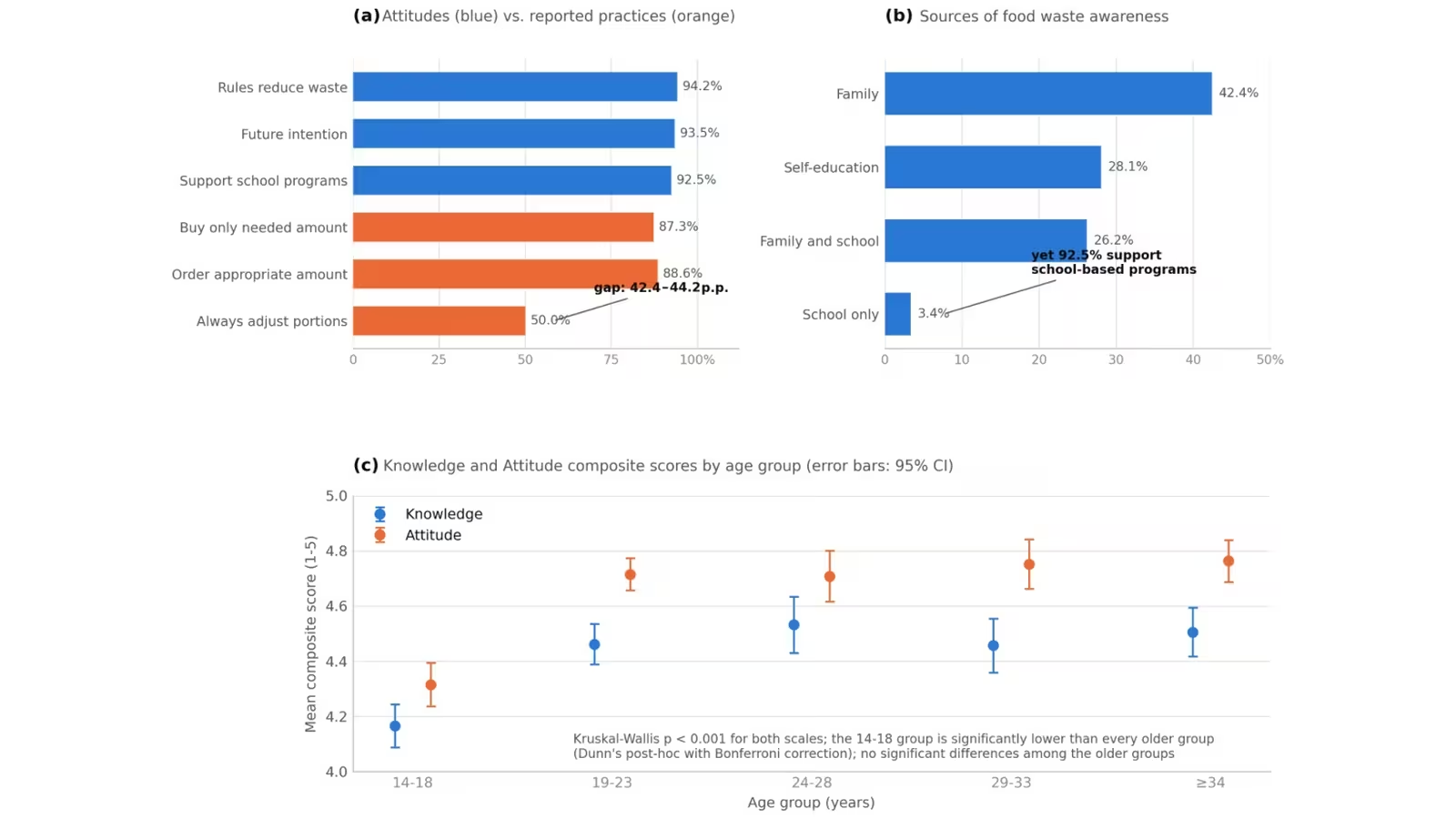
Snowball sampling via social media and educational networks yielded 955 valid responses from participants aged 14-33 across six counties. Descriptive statistics, chi-square tests, Kruskal-Wallis tests with Dunn's post hoc comparisons, Pearson and Spearman correlation analyses, and effect size calculations were performed, guided by the Theory of Planned Behavior. Respondents showed high knowledge (89.47% aggregated positive responses) and strongly positive attitudes (>90% on all items).
What the findings mean
However, a significant attitude-behavior gap emerged: while 93.51% intended to reduce food waste, only 50.05% consistently adapted portions to appetite. Family was the primary source of awareness (42.41%), whereas formal schooling contributed minimally (3.35%), despite 92.46% supporting school-based education. Knowledge correlated strongly with attitudes (r = 0.624) but only moderately with practice (r = 0.326). Results highlight the need to integrate food waste education into formal curricula and develop targeted programs bridging the gap between positive attitudes and actual behavior change among Romanian youth.
Study authors: Smical AI, Sabo C, Petrovan A, Văduva B.. This report is based on the openly licensed abstract and source record and has been formatted for newsroom reading.
Foods (Basel, Switzerland)
https://europepmc.org/articles/PMC13606709This report is prepared from the public source listed above for news and industry-information purposes. Original research, text, trademarks and images remain with their authors and rights holders; open material is used under the licence identified by its source. Rights holders may contact rights@asiafoodtimes.com with evidence of ownership, and verified concerns will be corrected or removed promptly. This article is not investment, legal, medical or nutrition advice.