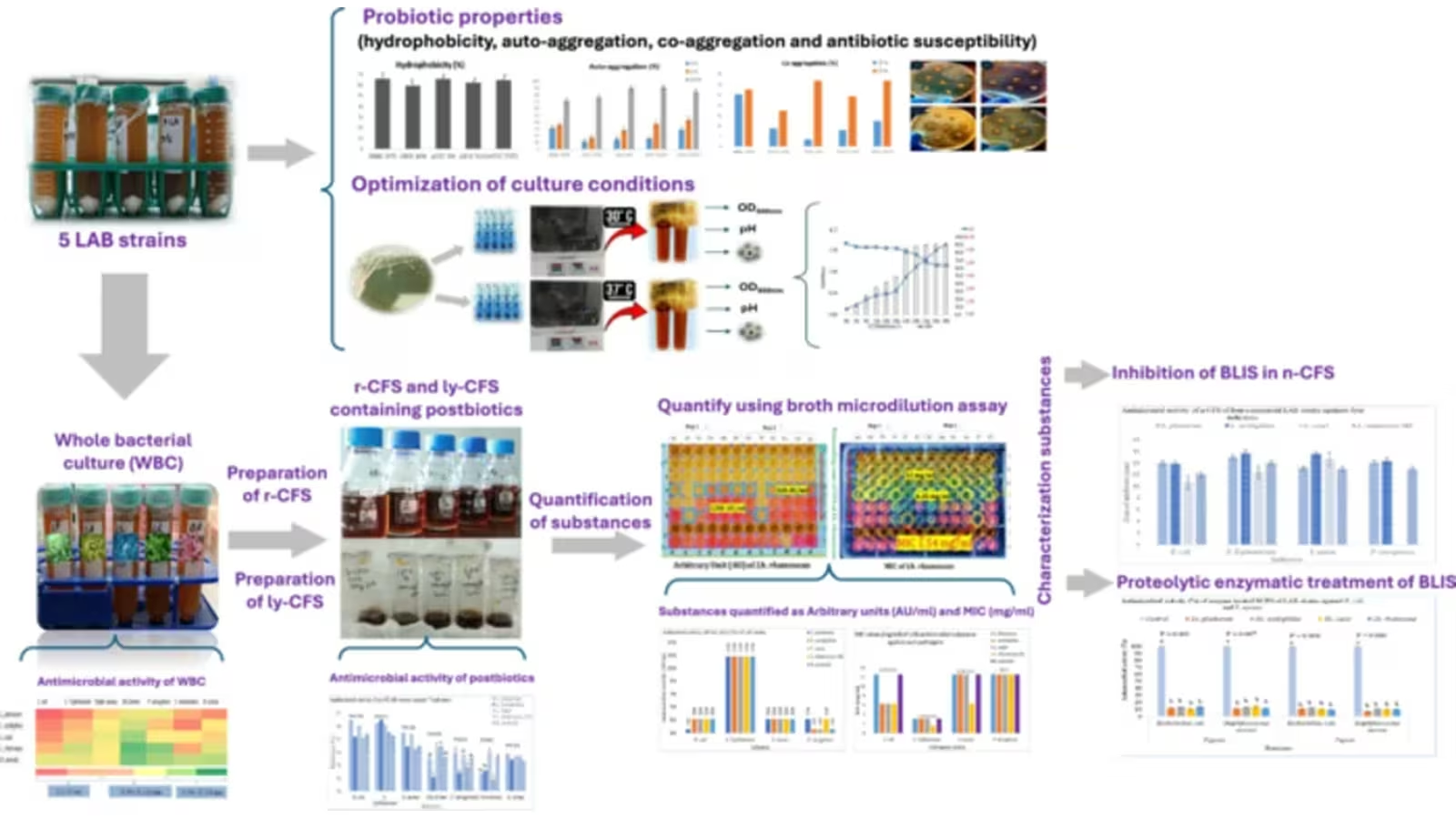
The rise of multidrug-resistant (MDR) pathogens presents a major challenge to food safety, particularly in preservation approaches. Lactic acid bacteria (LAB) gain probiotic recognition by effectively controlling MDR pathogens using antimicrobial substances (AMSs) and bacteriocin-like inhibitory substances (BLISs). The study evaluated the probiotic properties and AMS production potential of five LAB strains: Lactiplantibacillus plantarum NBRC 3070 (LP), Lactobacillus acidophilus ATCC 4356 (LA), Lacticaseibacillus casei ATCC 393 (LC), Lacticaseibacillus rhamnosus GG ATCC 53103 (LGG), and Bifidobacterium animalis subsp. lactis ATCC 27673 (BAL). AMS was extracted from neutralized and concentrated cell-free supernatant and tested for antimicrobial activities against common foodborne pathogens using minimum inhibitory concentrations (MICs).
What the research examined
All LAB strains showed antagonistic activity, with LP demonstrating the most substantial antagonism. Four strains are resistant to multiple antibiotics but remain susceptible to azithromycin and tetracycline, while LP is resistant to all tested antibiotics. LP and LC demonstrated the highest probiotic potential based on cell surface hydrophobicity and aggregation abilities. Optimal AMS activity (85.36%-91.29%) occurred between 24 and 36 h at 37°C or 28-48 h at 30°C.
What the findings mean
LGG exhibited the highest AMS activity with the lowest MIC against Salmonella enterica serovar Typhimurium. Enzyme sensitivity confirmed the peptide nature of BLIS produced by BLIS from LP, LA, LC, and LGG. In conclusion, LAB strains demonstrated significant probiotic traits and the ability to produce AMS, especially BLIS, from four strains, with LP and LC showing the most potential. These findings support their application as natural biopreservation against MDR pathogens; however, further validation in the food system is required.
Study authors: Rahman MM, Sazili AQ, Ahmad SA, Khalil KA, Ismail-Fitry MR, Sarker MSK.. This report is based on the openly licensed abstract and source record and has been formatted for newsroom reading.
MicrobiologyOpen
https://europepmc.org/articles/PMC13613172This report is prepared from the public source listed above for news and industry-information purposes. Original research, text, trademarks and images remain with their authors and rights holders; open material is used under the licence identified by its source. Rights holders may contact rights@asiafoodtimes.com with evidence of ownership, and verified concerns will be corrected or removed promptly. This article is not investment, legal, medical or nutrition advice.