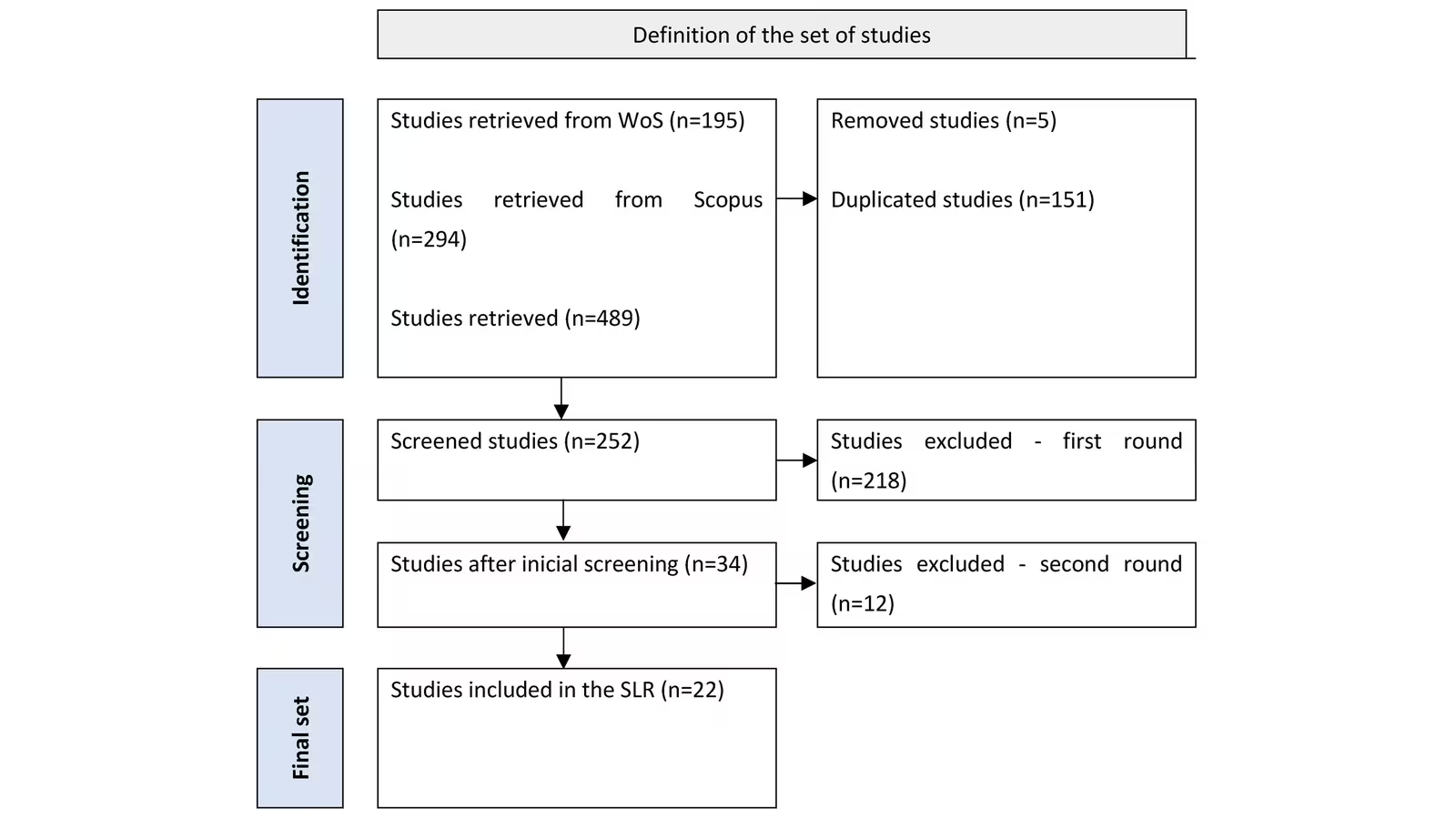
Digital technologies are increasingly used to understand and influence consumer food waste behavior, yet evidence on their applications and effectiveness remains fragmented. This systematic literature review synthesizes research at the intersection of consumer behavior, technological innovation, and food waste. Peer-reviewed articles published in English were identified through searches of Scopus and Web of Science, resulting in a final sample of 22 studies.
What the research examined
Thematic analyses were conducted to examine publication patterns, research contexts, methodological approaches, and emerging research gaps. The literature shows a shift from predominantly theoretical and exploratory work towards more applied, technology-centered research. Scientific production is concentrated in Australia, China, Italy, the Netherlands, and the United Kingdom, while the selected studies are mainly published in journals focused on environmental sustainability, food-chain management, and consumer psychology. Two broad research approaches were identified: quantitative studies using cross-sectional surveys and statistical modeling, in which technology is treated as an explanatory factor, and experimental or design-oriented studies that employ technology as a direct intervention.
What the findings mean
However, the evidence base is constrained by extensive reliance on self-reported data, recall and social-desirability bias, and cross-sectional designs that limit causal and long-term conclusions. Future research should therefore prioritize longitudinal, mixed-methods, and objective measurement approaches, while examining emotional and psychological responses to food-waste-prevention technologies. The implementation of such technologies also requires attention to usability, user fatigue, privacy and ethical concerns, and psychological and cultural barriers to adoption. Overall, the findings indicate that digital technologies offer promising but insufficiently validated opportunities to support food waste reduction and that stronger empirical evidence is needed to guide their effective and responsible development.
Study authors: Salume PK, Barbosa MW, Pinto MR.. This report is based on the openly licensed abstract and source record and has been formatted for newsroom reading.
Foods (Basel, Switzerland)
https://europepmc.org/articles/PMC13606489This report is prepared from the public source listed above for news and industry-information purposes. Original research, text, trademarks and images remain with their authors and rights holders; open material is used under the licence identified by its source. Rights holders may contact rights@asiafoodtimes.com with evidence of ownership, and verified concerns will be corrected or removed promptly. This article is not investment, legal, medical or nutrition advice.