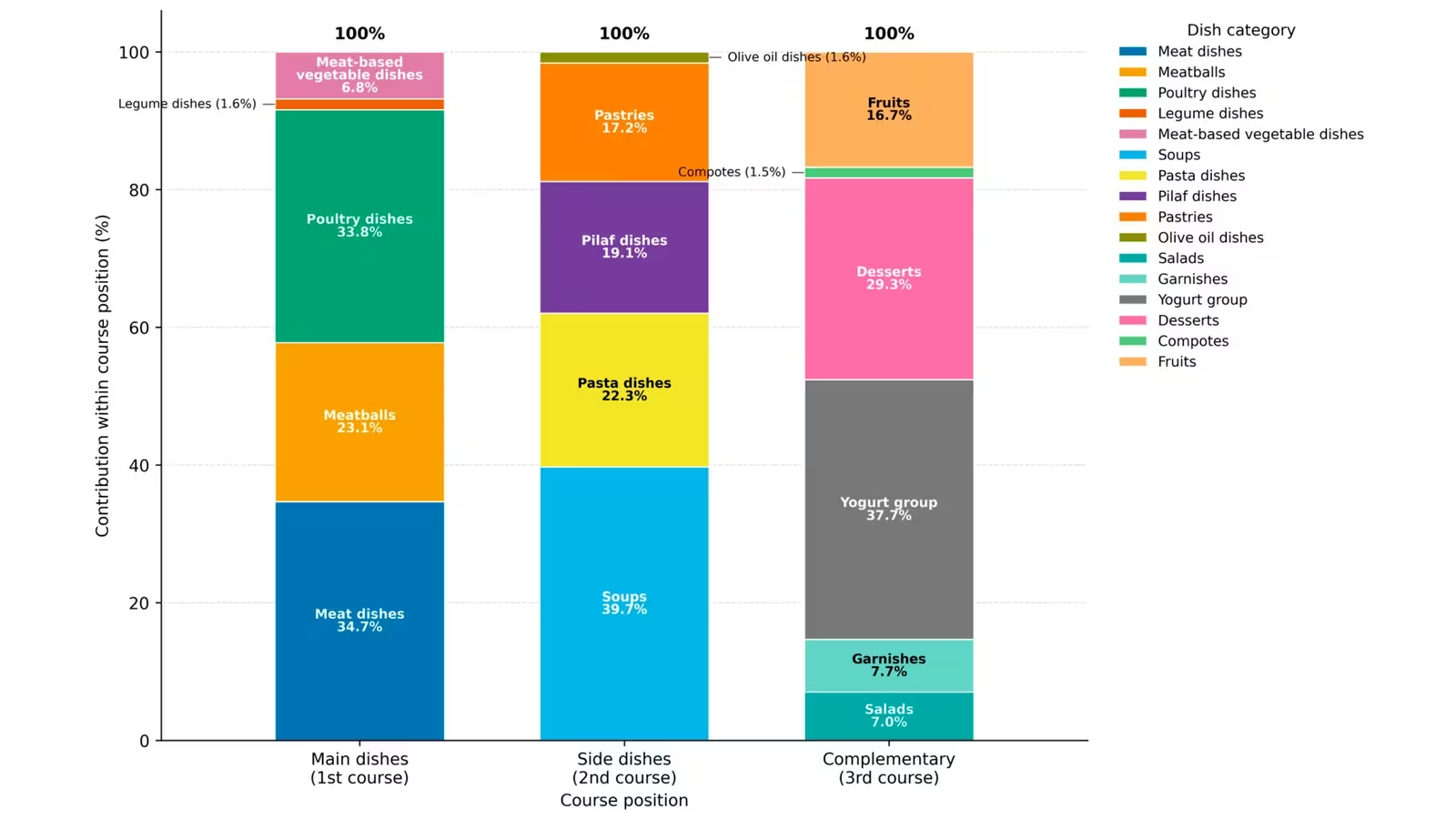
University canteen menus are increasingly evaluated for their environmental impacts, yet sustainability strategies often focus on single-food substitutions rather than on overall meal structure. This study investigated whether environmental improvements are better achieved through main-dish substitution or through redesigning menu architecture while maintaining nutritional efficiency.
What the research examined
An LCA-based dataset of university canteen meals was restructured into a fixed four-course architecture, and four representative scenarios were evaluated for energy, protein, carbon, and water footprints, as well as the protein-adjusted carbon footprint. This was followed by a Monte Carlo simulation (10,000 iterations per scenario) using the observed annual menu dataset. Main-dish substitution reduced the carbon footprint by 27.3% (from 2.355 to 1.713 kg CO 2 e) but decreased protein by 24.9% and increased the water footprint by 12.5%.
What the findings mean
Restructuring the side and complementary dishes instead reduced the carbon footprint by 23.1% and the water footprint by 67.5% while preserving protein content. Monte Carlo simulation confirmed the strongest profile for the restructuring scenario, with the lowest median protein-adjusted carbon footprint (0.069 kg CO 2 e/g protein) and the highest probabilities of outperforming the reference menu in carbon footprint (86.2%), water footprint (76.9%), and protein-adjusted carbon footprint (81.3%). These findings suggest that optimizing menu architecture, not main-dish substitution alone, offers a practical strategy for reducing environmental burden while maintaining nutritional efficiency in institutional food services.
Study authors: Çapaş M, Azgın ŞT.. This report is based on the openly licensed abstract and source record and has been formatted for newsroom reading.
Foods (Basel, Switzerland)
https://europepmc.org/articles/PMC13564776This report is prepared from the public source listed above for news and industry-information purposes. Original research, text, trademarks and images remain with their authors and rights holders; open material is used under the licence identified by its source. Rights holders may contact rights@asiafoodtimes.com with evidence of ownership, and verified concerns will be corrected or removed promptly. This article is not investment, legal, medical or nutrition advice.