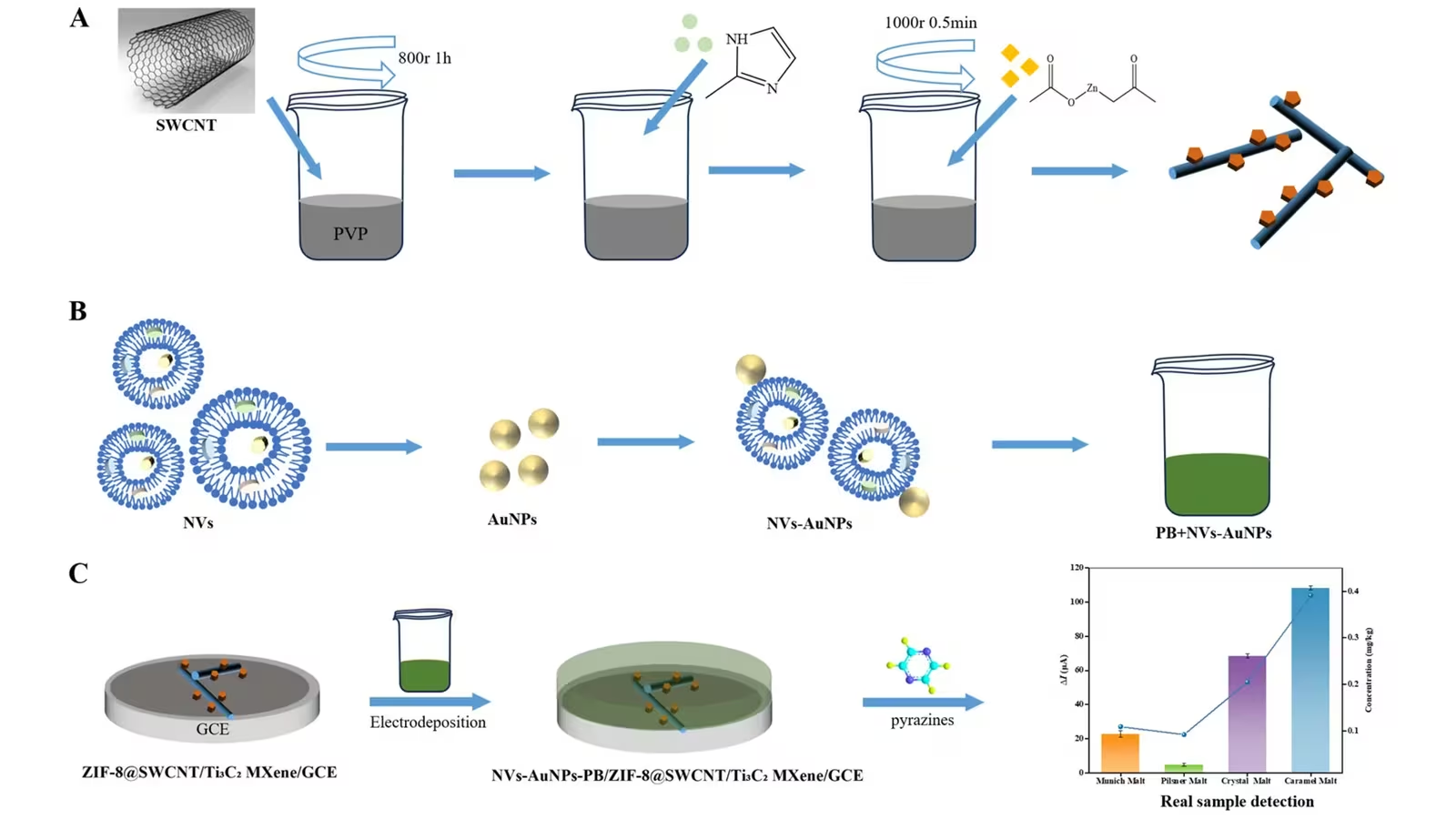
Pyrazines are the key odorants in food contributing to baked and nutty aromas. In order to improve practicality, a novel electrochemical olfactory biosensor for pyrazine analysis was developed using an olfactory receptor (OR5K1) as the recognition element and AuNPs-PB/ZIF-8@SWCNT/Ti 3 C 2 MXene as the sensing matrix. The sensing application and molecular recognition mechanism of OR5K1 toward pyrazines were explored using molecular docking and in silico site-directed mutagenesis.
What the research examined
We explored the sensing application and molecular recognition mechanism of OR5K1 toward pyrazines using molecular docking and in silico site-directed mutagenesis. The sensor achieved a linear detection range of 10 -14 to 10 -9 M with a low detection limit of 10 -14 M. The biosensor exhibited significantly higher current responses toward pyrazine compounds compared to interfering substances, including ethanol, hexanal, acetone, and phenol, demonstrating excellent selectivity, and retained 79% of its initial signal after 12 days of storage, indicating good stability. The change in the reduction peak current (ΔI) in the presence of pyrazine was used as an analytical signal.
What the findings mean
When applied to four malt samples (pilsner, munich, crystal, and caramel malts), the biosensor showed ΔI responses ranging from 4.6 ± 0.2 µA to 108 ± 6 µA, which corresponded well with the total pyrazine contents determined by GC-TOF/MS (0.092-0.391 mg/kg), with a correlation coefficient of 0.96. Molecular docking revealed binding energies ranging from -3.9 to -6.0 kcal/mol, suggesting spontaneous interactions between OR5K1 and pyrazines, with Leu14, Met81, Asn84, Phe17, Phe85, and Lys90 identified as potential key residues and hydrogen bonds, hydrophobic interactions, and π-π stacking as primary driving forces. This work provides a sensitive and selective biosensor for pyrazine detection, and the elucidated recognition mechanism offers a molecular basis for understanding roasted aroma perception, supporting applications in food quality control and flavor analysis. Collectively, this study offers new insights for designing olfactory receptor-based electrochemical biosensors and facilitates future exploration of food aroma-receptor interaction mechanisms.
Study authors: Zhang L, Chen YP, Tan SY, Xie Z, Wang X, Liu Y.. This report is based on the openly licensed abstract and source record and has been formatted for newsroom reading.
Foods (Basel, Switzerland)
https://europepmc.org/articles/PMC13606829This report is prepared from the public source listed above for news and industry-information purposes. Original research, text, trademarks and images remain with their authors and rights holders; open material is used under the licence identified by its source. Rights holders may contact rights@asiafoodtimes.com with evidence of ownership, and verified concerns will be corrected or removed promptly. This article is not investment, legal, medical or nutrition advice.



![Effects of Colchicine Treatment on Bioactive Compounds and Structural Characteristics of the Epidermis and Cortex of Edible Cactus [ Opuntia ficus-indica (L.) Mill.] Cladodes at Different Maturity Stages.](/media/50bd05bc3790beaccba597aebf5834600d29f4db96ee4a7259db469ff512ec16)