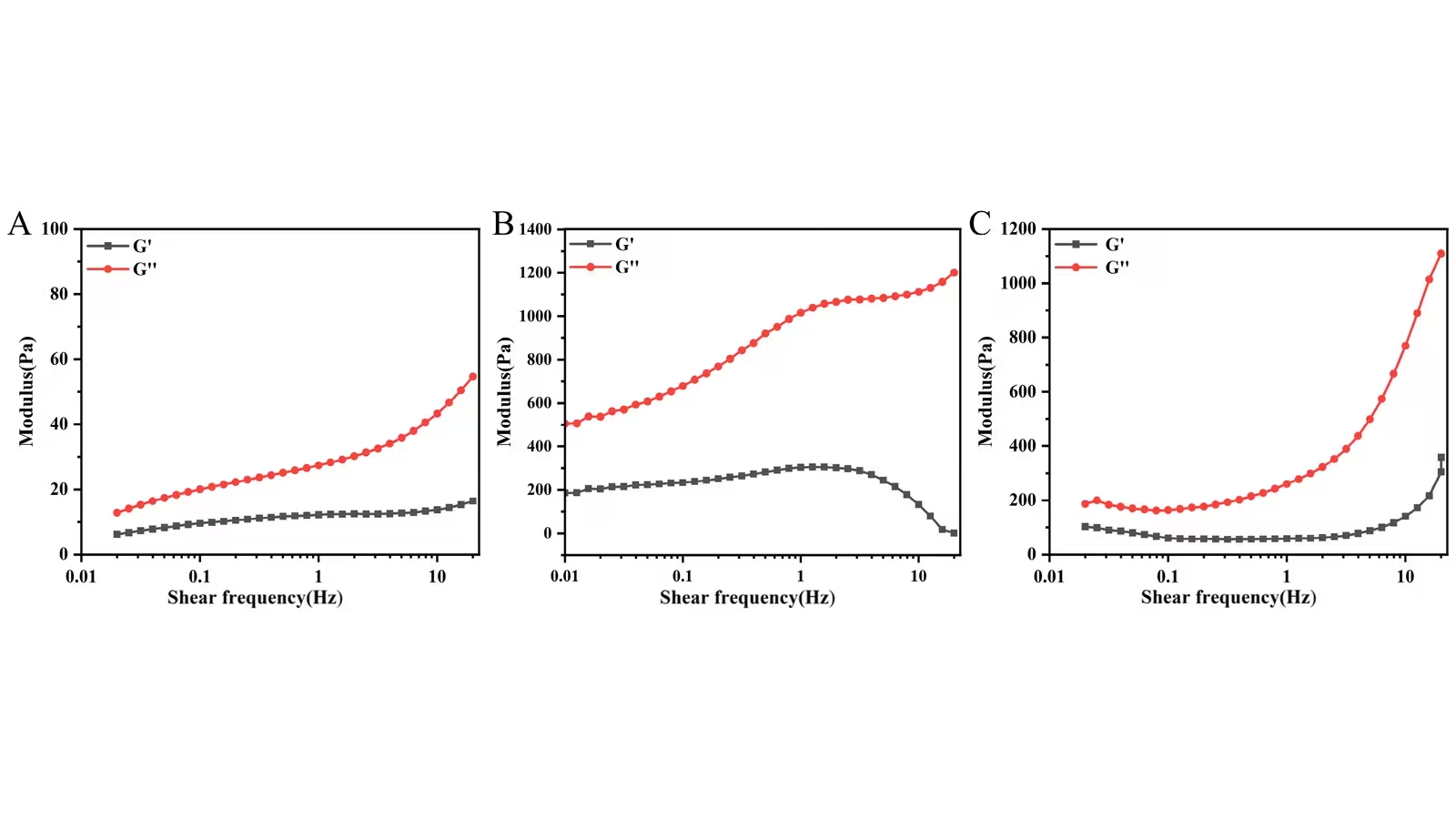
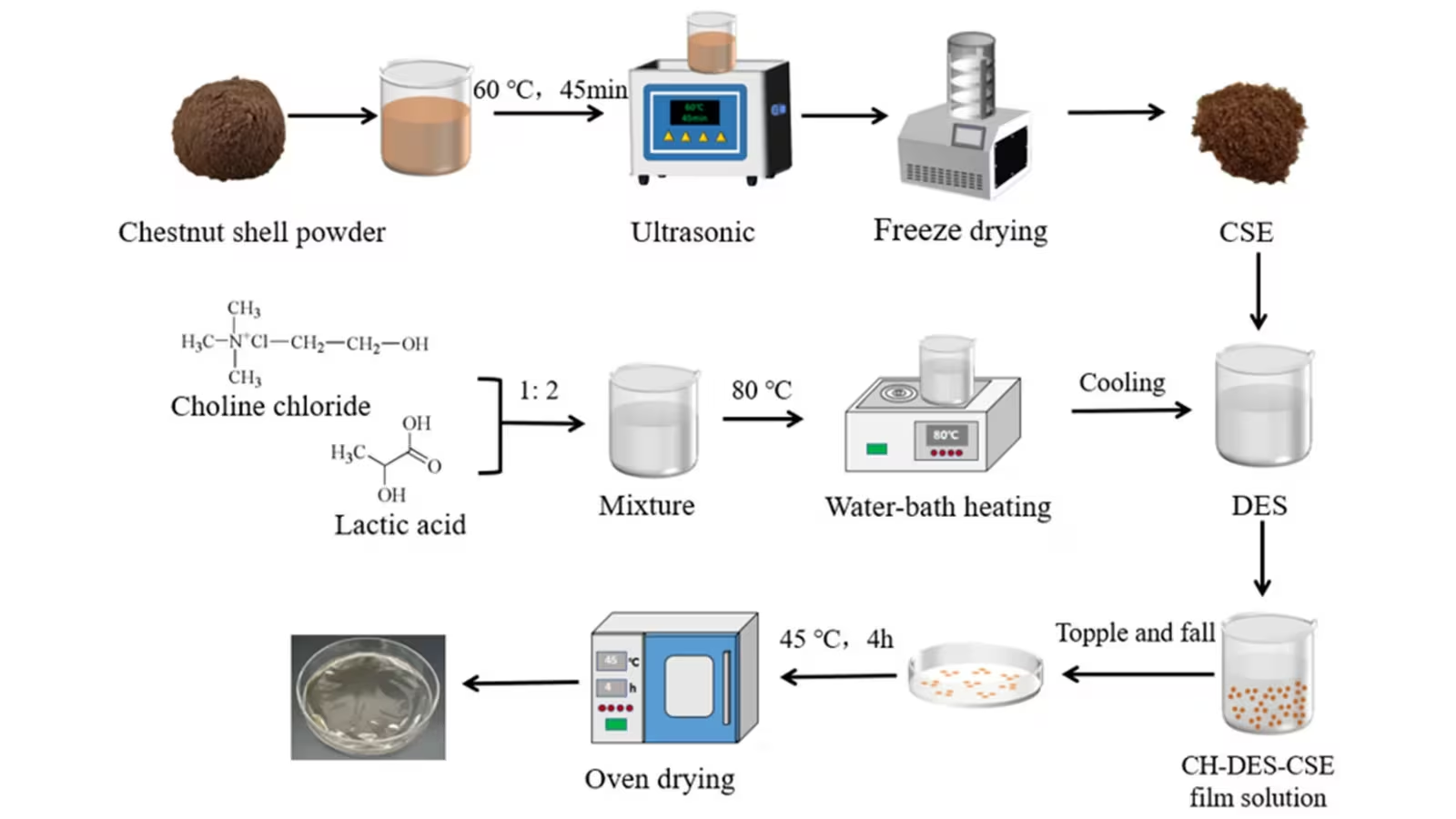
In this study, ternary composite active packaging films composed of chitosan (CH), deep eutectic solvent (DES), and chestnut shell extract (CSE) were prepared. The physicochemical properties, structural characteristics, and application in strawberry preservation were studied. The results show that the DES hydrogen-bond network may promote interactions between CSE and CH, enhancing compatibility and stability.
What the research examined
At 5% CSE addition, the maximum values were observed for antioxidant activity (DPPH: 80.49%, ABTS: 86.69%) and antibacterial activity (Antibacterial Zone Diameter (AZD): 27.61 mm for Escherichia coli E. coli and 27.15 mm for Staphylococcus aureus ). FTIR analysis indicated the hydrogen bonding between CSE and the polymer matrix. XRD results indicated that CSE addition enhanced the crystallinity of the film matrices, while SEM revealed that it promoted the formation of a dense structure. Molecular docking results provide computational evidence suggesting that DES may serve as an interfacial bridge connecting CH and CSE.
What the findings mean
Satisfactorily, after treatment with the CH-DES-CSE-5% film, the shelf life of strawberries was significantly extended. After 8 days of storage, the decay rate (36.67%) was significantly lower than that of the control group (96.67%). The original quality indicators were well maintained. This study provides a theoretical basis for both the valorization of chestnut shell waste and the development of CSE-based active food packaging materials.
Study authors: Xue J, Sun Y, Wang M, Huai L, Xiao Y, Lu Z, Li Z, Zhou X, Wang H, Cui R, Song L.. This report is based on the openly licensed abstract and source record and has been formatted for newsroom reading.
Foods (Basel, Switzerland)
https://europepmc.org/articles/PMC13605491This report is prepared from the public source listed above for news and industry-information purposes. Original research, text, trademarks and images remain with their authors and rights holders; open material is used under the licence identified by its source. Rights holders may contact rights@asiafoodtimes.com with evidence of ownership, and verified concerns will be corrected or removed promptly. This article is not investment, legal, medical or nutrition advice.