Fresh fruits are highly perishable products whose acceptance depends not only on external appearance and firmness, but also on the preservation of taste and aroma. This review addresses the relationship between active packaging and the maintenance of fruit sensory quality, with special emphasis on the volatilome as a dynamic marker of aroma integrity.
What the research examined
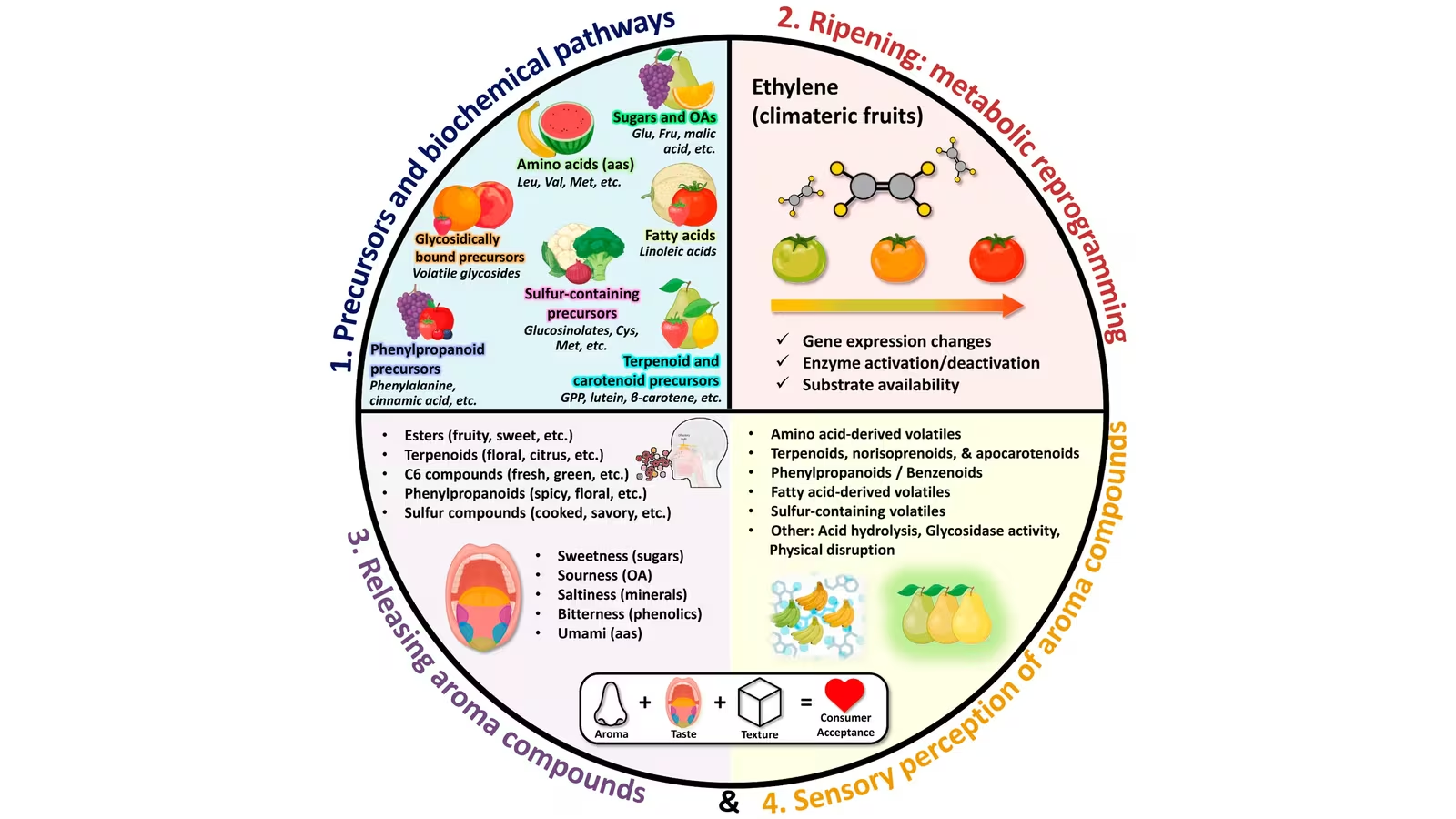
The first part examines how taste and aroma are formed during ripening through the interaction of sugars, organic acids, phenolics, amino acids, and a wide range of volatile compounds, including fatty-acid-derived esters and aldehydes, terpenoids, carotenoid-derived norisoprenoids, phenylpropanoids, sulfur-containing compounds, and glycosidically bound precursors. It then analyzes how these traits deteriorate during packaged shelf life through temperature effects, refrigerated and room-temperature storage, microbial and enzymatic activity, mechanical damage, and packaging-atmosphere imbalance, showing that visual and sensory shelf life do not necessarily decline together. The second part reviews how active packaging can preserve-or unintentionally distort-this volatilome, covering modified-atmosphere and gas-regulating systems, antimicrobial and ethylene-managing systems based on released essential oils, sulfur dioxide and ethanol emitters, oxygen and carbon dioxide regulators, moisture absorbers, multi-active combinations, and packaging-adjacent edible coatings.
What the findings mean
A recurring principle emerges: every active function is double-edged, as an intervention that delays spoilage or senescence may itself add exogenous notes or trigger fermentative off-flavors unless it is tuned to a sensory compatibility threshold. The packaging material is also decisive, since paper and cardboard buffer humidity and interact weakly with aroma compounds, whereas high-barrier polymers sustain a modified atmosphere but can scalp esters and terpenes; conversely, releasing volatiles compatible with the native aroma can act as an aroma-positive strategy that restores characteristic notes. Active packaging should therefore be evaluated not only by conventional quality parameters, but also by headspace gas evolution, sugar/acid balance, odor-active volatiles, off-flavor markers, and sensory validation, together with consumer acceptance, odor-threshold relevance, migration and safety considerations, and kinetic matching between active-agent release, fruit respiration, and flavor evolution.
Study authors: Melgarejo-Martínez P, López-Gómez A, Acosta-Motos JR, Martínez-Hernández GB, Franco-Navarro JD, Pérez-López AJ.. This report is based on the openly licensed abstract and source record and has been formatted for newsroom reading.
Foods (Basel, Switzerland)
https://europepmc.org/articles/PMC13606839This report is prepared from the public source listed above for news and industry-information purposes. Original research, text, trademarks and images remain with their authors and rights holders; open material is used under the licence identified by its source. Rights holders may contact rights@asiafoodtimes.com with evidence of ownership, and verified concerns will be corrected or removed promptly. This article is not investment, legal, medical or nutrition advice.