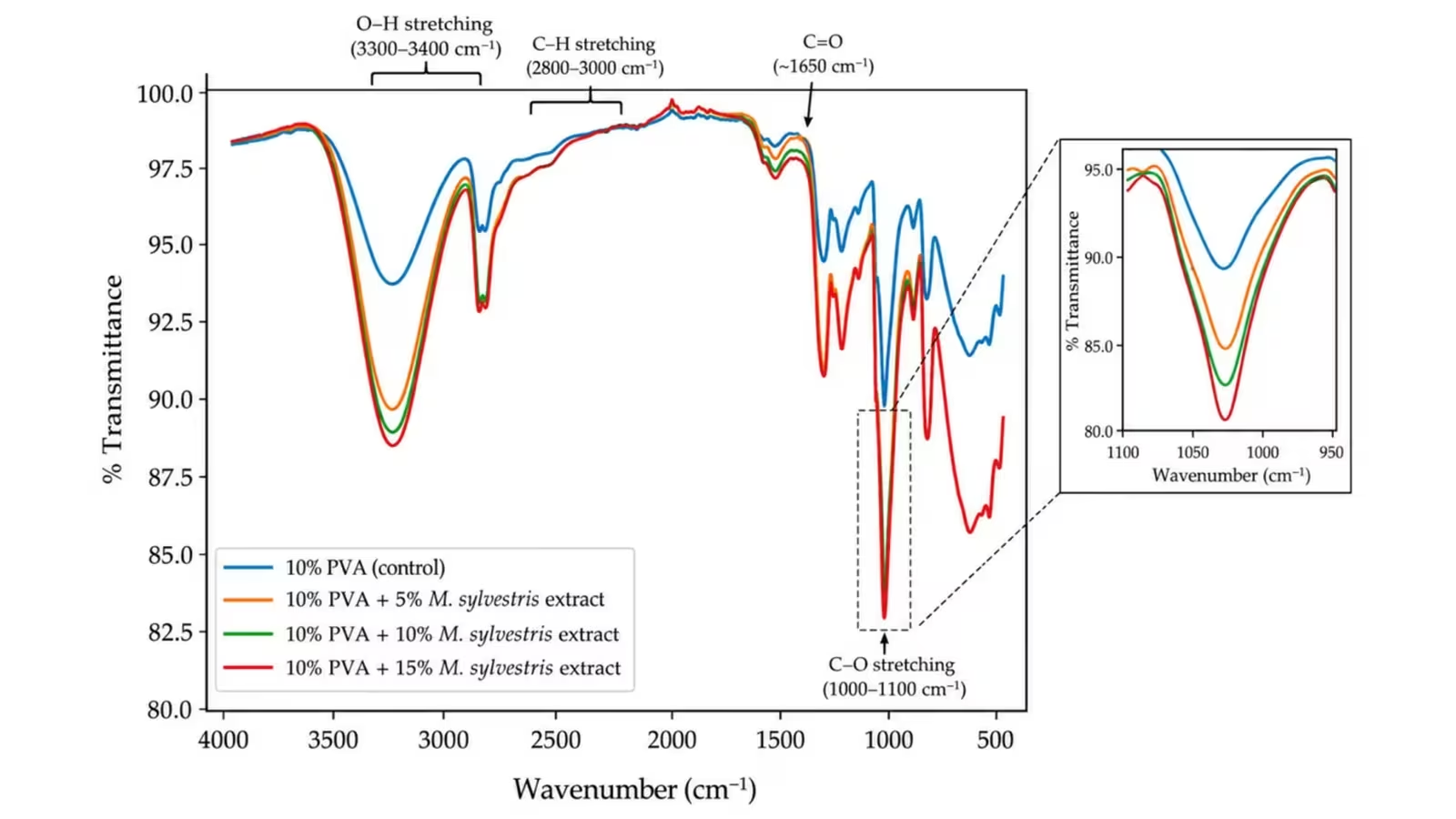
The development of bioactive packaging materials represents a promising strategy for reducing postharvest quality losses in fresh produce. In this study, phenolic-rich poly(vinyl alcohol) (PVA) electrospun nanofiber mats incorporating Malva sylvestris L. (mallow) leaf extract at 5%, 10%, and 15% were developed and evaluated as active packaging materials for blueberry preservation. The resulting nanofibers were characterized in terms of morphology, phenolic content, antioxidant activity, and antibacterial properties, followed by evaluation of their preservation performance during refrigerated blueberry storage.
What the research examined
Scanning electron microscopy revealed smooth, bead-free nanofibers, with mean fiber diameter decreasing from 702 ± 76 nm for the PVA control to 353 ± 38 nm for nanofibers containing 15% extract. Total phenolic content increased significantly with extract loading, reaching 17.76 ± 0.29 mg GAE/g in the 15% formulation. A corresponding concentration-dependent enhancement in antioxidant activity was observed, with the 15% extract-loaded nanofibers exhibiting DPPH and ABTS radical-scavenging activities of 82.9 ± 2.0% and 89.7 ± 2.3%, respectively. The same formulation showed the strongest antibacterial activity among the nanofiber mats, with minimum inhibitory concentrations of 8 μg/mL against Staphylococcus aureus and 16 μg/mL against Escherichia coli .
What the findings mean
When applied as an active packaging mat for blueberries stored under refrigerated conditions, the nanofiber treatment markedly delayed visible quality deterioration. After 14 days, nanofiber-packaged blueberries retained a visual-quality score of 4.2 ± 0.45, whereas the untreated control decreased to 1.6 ± 0.55 and was considered commercially unacceptable. Overall, the results demonstrate that incorporation of M. sylvestris L. extract into electrospun PVA nanofiber mats provides concentration-dependent phenolic, antioxidant, and antibacterial functionality and contributes to improved maintenance of blueberry visual quality during refrigerated storage. These findings support the potential of M. sylvestris -loaded electrospun nanofiber mats as active packaging materials for fresh-produce preservation.
Study authors: Saygun A.. This report is based on the openly licensed abstract and source record and has been formatted for newsroom reading.
Molecules (Basel, Switzerland)
https://europepmc.org/articles/PMC13609245This report is prepared from the public source listed above for news and industry-information purposes. Original research, text, trademarks and images remain with their authors and rights holders; open material is used under the licence identified by its source. Rights holders may contact rights@asiafoodtimes.com with evidence of ownership, and verified concerns will be corrected or removed promptly. This article is not investment, legal, medical or nutrition advice.