The development of sustainable active food packaging materials with multifunctional protective capabilities is highly desirable for improving food safety and extending shelf life. In this study, sulfur- and nitrogen-rich carbon dots (GLCDs) were synthesized from glycine and lipoic acid through a facile hydrothermal approach and subsequently incorporated into chitosan/poly(vinyl alcohol) (PVA) matrices to fabricate multifunctional nanocomposite films.
What the research examined
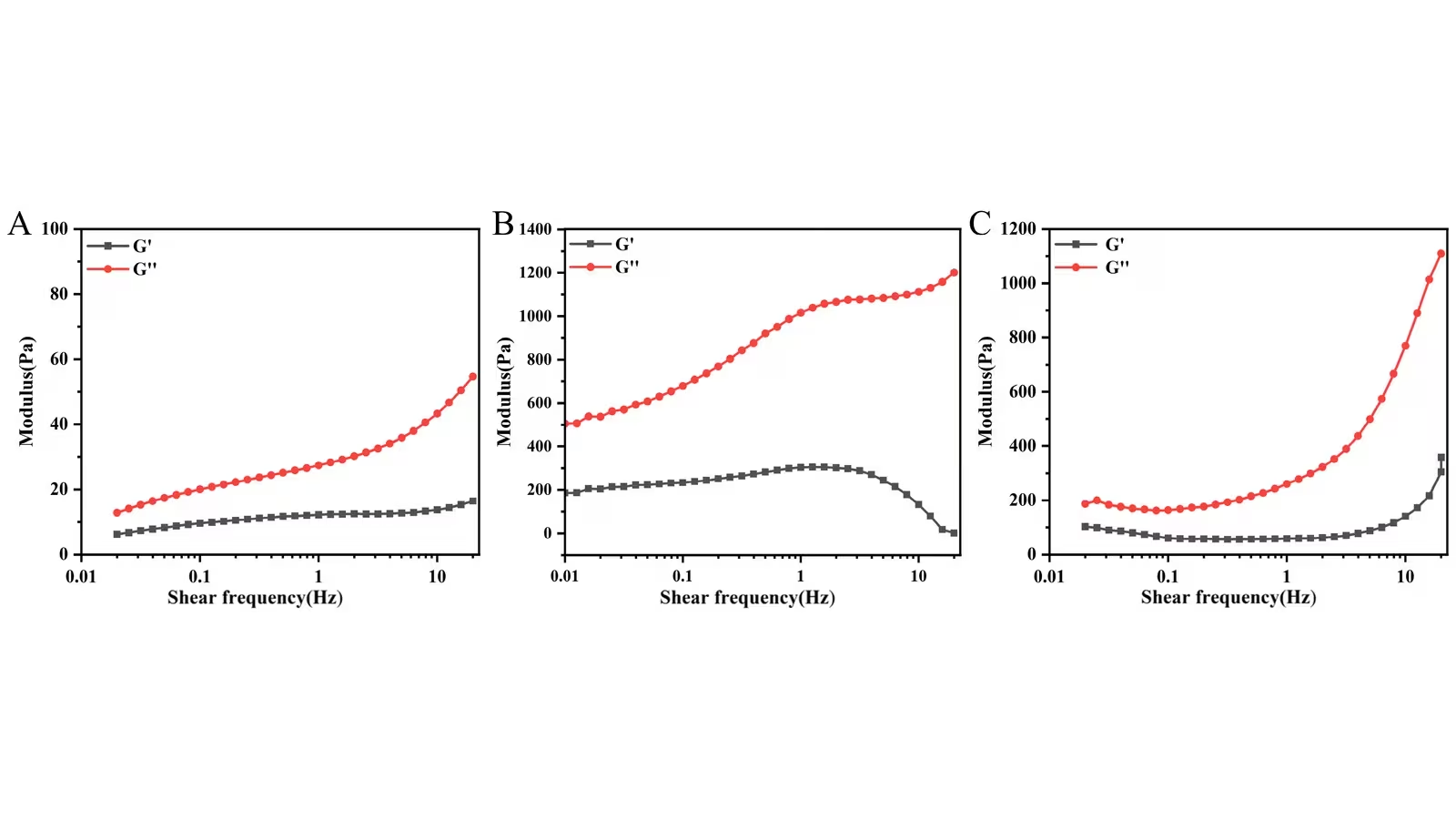
Structural and physicochemical characterization suggested the successful incorporation of GLCDs within the polymer network and suggested favorable interactions between the nanofillers and the chitosan/PVA matrix. The GLCD-incorporated films exhibited enhanced mechanical strength, improved thermal stability, reduced water vapor permeability, and superior UV-shielding performance compared with pristine chitosan/PVA films. Furthermore, the nanocomposite films demonstrated significantly enhanced antioxidant activity, achieving approximately 60% DPPH and 90% ABTS radical scavenging efficiency at higher GLCD loading.
What the findings mean
The films also exhibited strong antibacterial activity and demonstrated preservation potential based on qualitative observations during storage by reducing visible spoilage and maintaining structural integrity. In addition, the developed films showed excellent cytocompatibility toward NIH-3T3 fibroblast cells with high cell viability after 5 days of culture. The synergistic combination of GLCDs and chitosan/PVA matrices provides an effective strategy for developing biodegradable, multifunctional, and cytocompatible active packaging materials with potential food-packaging applications.
Study authors: Althawab SA.. This report is based on the openly licensed abstract and source record and has been formatted for newsroom reading.
Polymers
https://europepmc.org/articles/PMC13611285This report is prepared from the public source listed above for news and industry-information purposes. Original research, text, trademarks and images remain with their authors and rights holders; open material is used under the licence identified by its source. Rights holders may contact rights@asiafoodtimes.com with evidence of ownership, and verified concerns will be corrected or removed promptly. This article is not investment, legal, medical or nutrition advice.