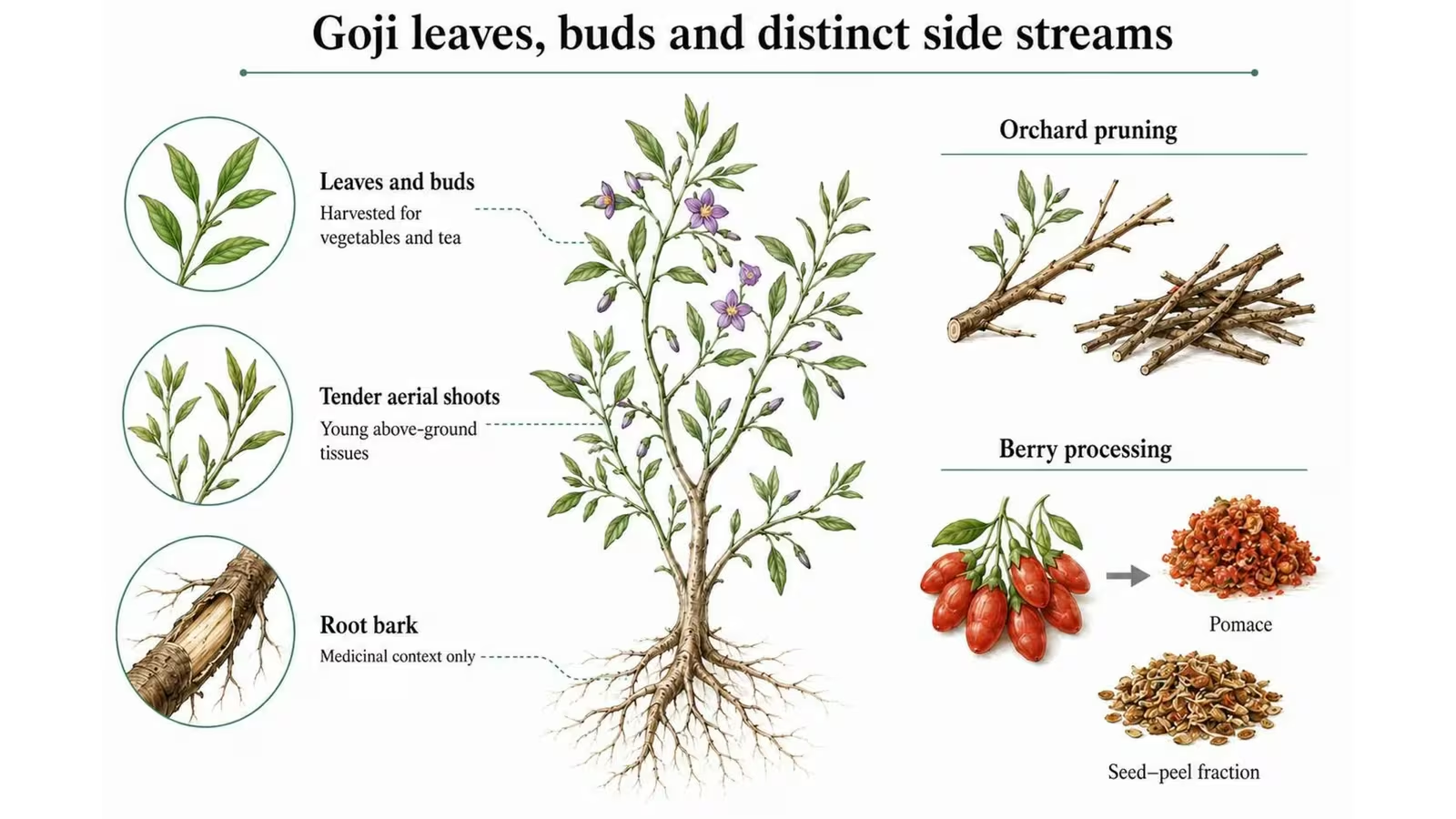
Goji leaves and buds are used as vegetables and teas, but their composition and behavior in formulated foods differ from those of the berries. This critical narrative review examines their phytochemistry, processing, food applications, digestion, and safety, with selected comparisons to berry-processing residues and orchard biomass. The literature includes leaf-tea processing, polysaccharide-modified dough, emulsion delivery systems, and bud-tea or leaf-extract additions to savory foods.
What the research examined
Genotype, harvest stage, and extraction account for substantial compositional variation. In food matrices, improvements in rheology, oxidative stability, or flavor depend on formulation and dose-higher inclusion does not consistently improve sensory quality. Simulated digestion and biological models provide preparation-specific findings but do not establish clinical efficacy. Safety evidence includes a short-term toxicology study of one roasted Lycium chinense leaf extract and pesticide occurrence and infusion-transfer measurements in bud tea.
What the findings mean
Neither dataset establishes safety across all leaf-derived products. Berry residues have separate applications in bakery products, ingredient recovery, and animal feed, whereas woody branches are predominantly agricultural biomass. Extraction yield alone establishes neither food suitability nor environmental benefit. The main unresolved issue is whether the compositional and technological effects observed in individual experiments persist across production batches, realistic servings, storage, and longer-term exposure.
Study authors: Zou J, Tian X, Wang S, Sun Y.. This report is based on the openly licensed abstract and source record and has been formatted for newsroom reading.
Foods (Basel, Switzerland)
https://europepmc.org/articles/PMC13606126This report is prepared from the public source listed above for news and industry-information purposes. Original research, text, trademarks and images remain with their authors and rights holders; open material is used under the licence identified by its source. Rights holders may contact rights@asiafoodtimes.com with evidence of ownership, and verified concerns will be corrected or removed promptly. This article is not investment, legal, medical or nutrition advice.

![Effects of Colchicine Treatment on Bioactive Compounds and Structural Characteristics of the Epidermis and Cortex of Edible Cactus [ Opuntia ficus-indica (L.) Mill.] Cladodes at Different Maturity Stages.](/media/50bd05bc3790beaccba597aebf5834600d29f4db96ee4a7259db469ff512ec16)