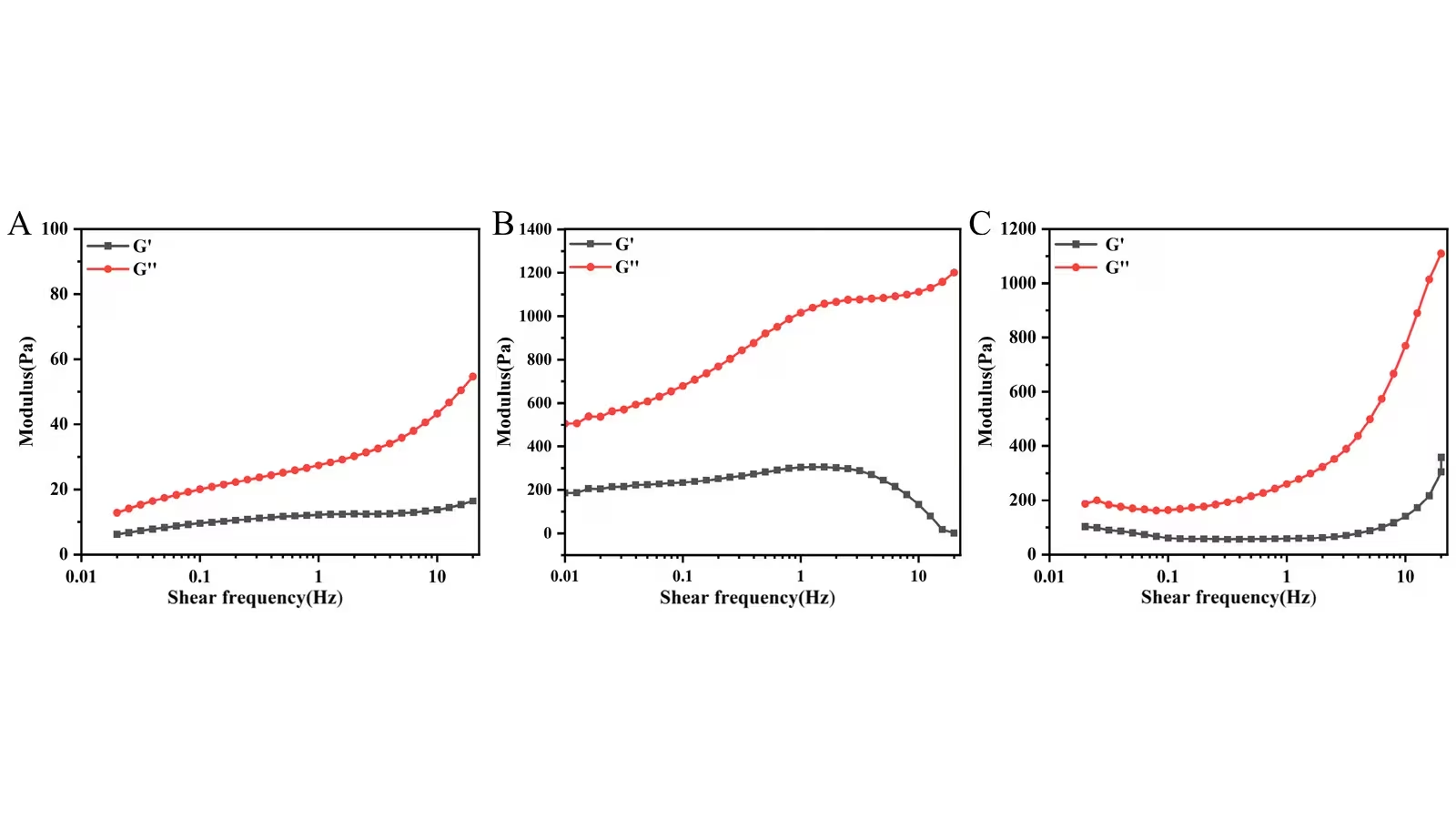
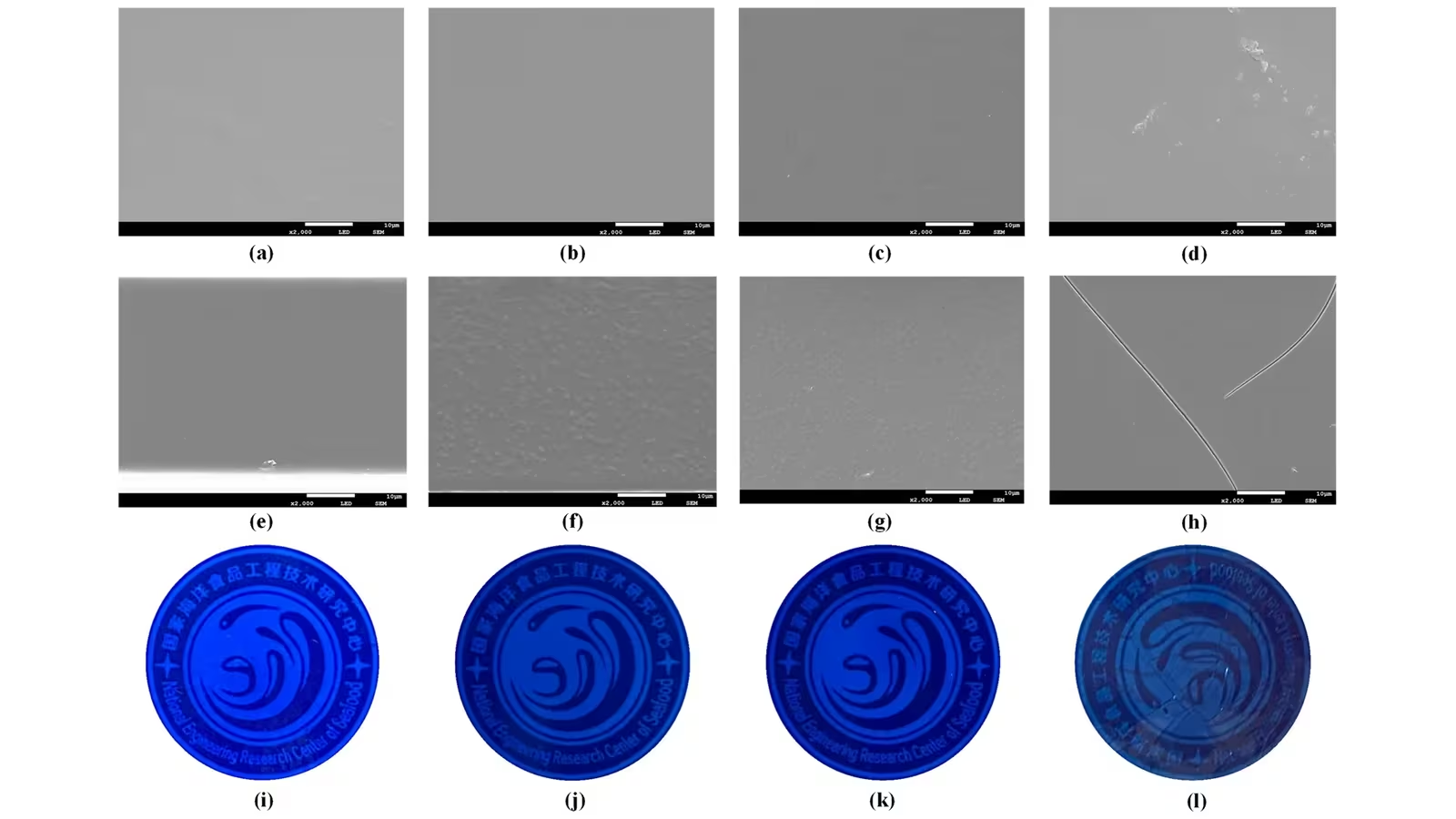
Phycocyanin-Cu 2+ -loaded gelatin-chitosan composite films (Gel/Cu@PC/Ch) were developed as active packaging materials to address the postharvest deterioration of fresh produce. A series of composite films with varying chitosan (Ch) concentrations (0.1%, 0.5%, 1%, 5%, w / v ) were systematically fabricated and characterized.
What the research examined
Scanning electron microscopy (SEM) revealed that the Gel/Cu@PC/Ch 0.5 film (0.5% chitosan) exhibited smooth, pore-free, and crack-free surface and cross-sectional morphologies, while a higher chitosan dosage (5%) triggered severe structural cracking. Gel/Cu@PC/Ch 0.5 achieved the maximum water contact angle of 101.13 ± 9.59°, demonstrating superior surface hydrophobicity. All composite films possessed outstanding UV-shielding capacity; meanwhile, ABTS and DPPH free radical scavenging rates rose gradually with increasing chitosan content, reaching 79.71 ± 0.72% and 84.91 ± 1.31% at 5% Ch, respectively.
What the findings mean
In antibacterial assessments, Gel/Cu@PC/Ch 0.5 showed effective inhibition against both Staphylococcus aureus and Escherichia coli , with inhibition zone diameters of 13.83 ± 0.42 mm and 14.93 ± 0.83 mm, respectively, owing to the synergistic bactericidal effect of Cu 2+ and chitosan. In grape preservation trials conducted over 12 days, Gel/Cu@PC/Ch 0.5 wrapped grapes exhibited the lowest weight loss (3.60 ± 0.30%), retained the highest residual firmness (316.16 ± 13.81 g) and total soluble solids (TSS), and maintained a significantly higher TAC value of 0.71 ± 0.12 nM after 12 days of storage, with no visible microbial spoilage or severe shriveling observed throughout storage. These results demonstrate that the Gel/Cu@PC/Ch 0.5 composite film achieves a desirable integration of moisture barrier performance, antioxidant activity, and broad-spectrum antibacterial efficacy, offering a scalable and biodegradable platform for active food packaging in fresh fruit preservation.
Study authors: Wang Z, Ding S, Wang Y, Deng W, Du Y, Su W, Wu D.. This report is based on the openly licensed abstract and source record and has been formatted for newsroom reading.
Foods (Basel, Switzerland)
https://europepmc.org/articles/PMC13564989This report is prepared from the public source listed above for news and industry-information purposes. Original research, text, trademarks and images remain with their authors and rights holders; open material is used under the licence identified by its source. Rights holders may contact rights@asiafoodtimes.com with evidence of ownership, and verified concerns will be corrected or removed promptly. This article is not investment, legal, medical or nutrition advice.