The extensive use of petroleum-based packaging materials has generated significant environmental concerns because of their poor biodegradability and their contribution to plastic pollution. Growing attention has therefore been directed toward sustainable packaging systems derived from renewable resources.
What the research examined
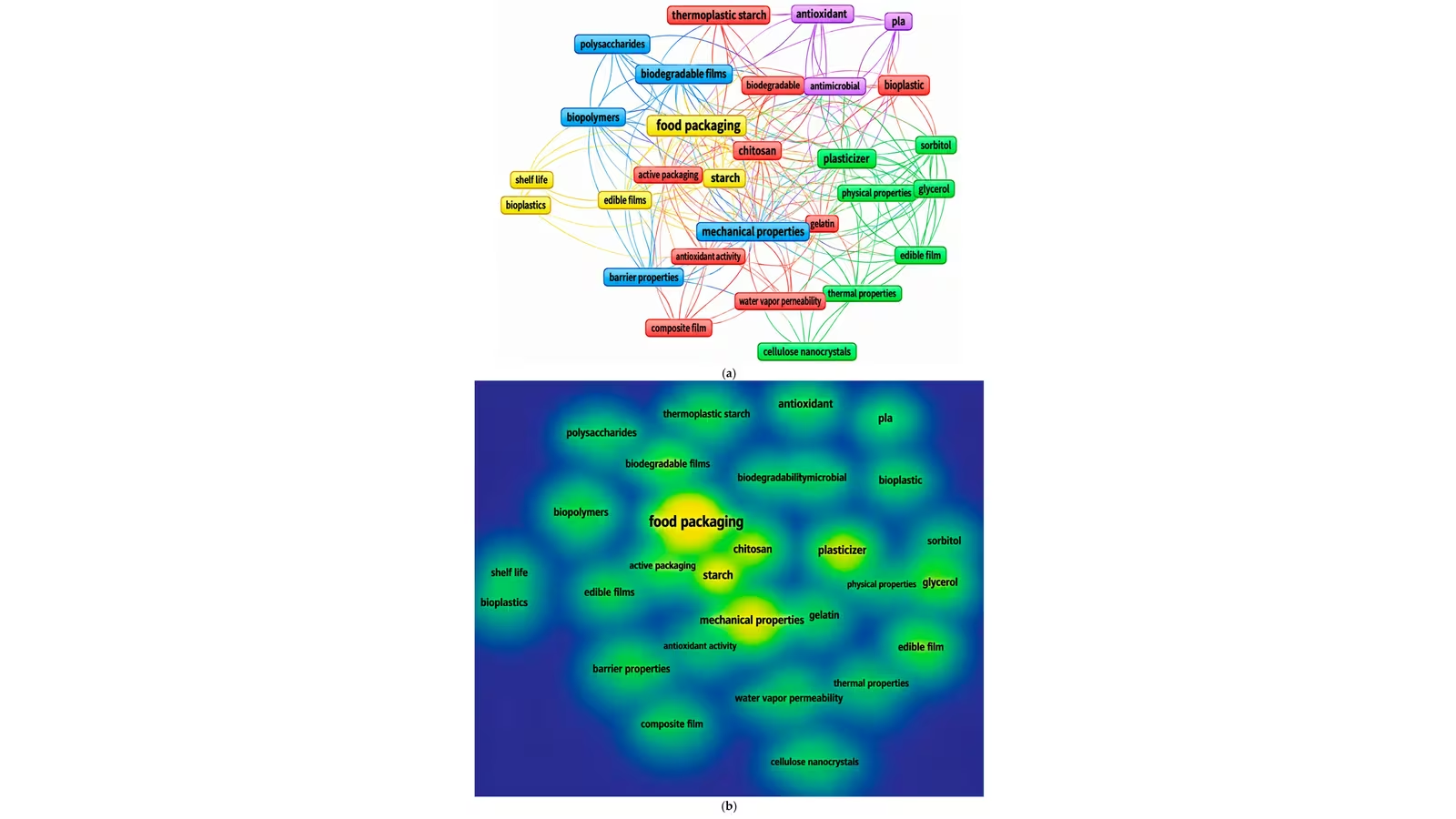
Among these alternatives, proteins recovered from pea-processing by-products have emerged as promising film-forming materials because of their biodegradability, renewability, and compatibility with circular-bioeconomy principles. This review critically synthesises, rather than merely catalogues, the development of pea protein-based films produced with different biopolymer matrices, with emphasis on fabrication methods, film-formation mechanisms, physicochemical and mechanical properties, barrier performance, and antimicrobial/antioxidant functionality.
What the findings mean
Where the literature reports conflicting or concentration-dependent results-for example, the divergent effect of essential oil type on tensile strength, or the existence of optimal polyphenol-loading thresholds beyond which mechanical and barrier performance deteriorate-mechanistic explanations grounded in protein additive interactions, cross-link density, and matrix polarity are proposed and discussed. Quantitative barrier and mechanical data extracted from the reviewed studies are compiled and compared on a normalised basis, and the regulatory, safety, and scale-up barriers relevant to active pea protein-based packaging (EU food-contact-material compliance, migration testing, allergenicity, and life-cycle assessment) are discussed explicitly given the review's focus on active food packaging. Overall, pea protein-based biodegradable films represent a promising and scientifically active alternative to petroleum-derived packaging materials, but their translation to commercial active-packaging products will depend on resolving moisture sensitivity, establishing standardised testing protocols, and generating the regulatory and techno-economic evidence base that is currently lacking.
Study authors: Altuntaş K, Saygün A.. This report is based on the openly licensed abstract and source record and has been formatted for newsroom reading.
Molecules (Basel, Switzerland)
https://europepmc.org/articles/PMC13567617This report is prepared from the public source listed above for news and industry-information purposes. Original research, text, trademarks and images remain with their authors and rights holders; open material is used under the licence identified by its source. Rights holders may contact rights@asiafoodtimes.com with evidence of ownership, and verified concerns will be corrected or removed promptly. This article is not investment, legal, medical or nutrition advice.