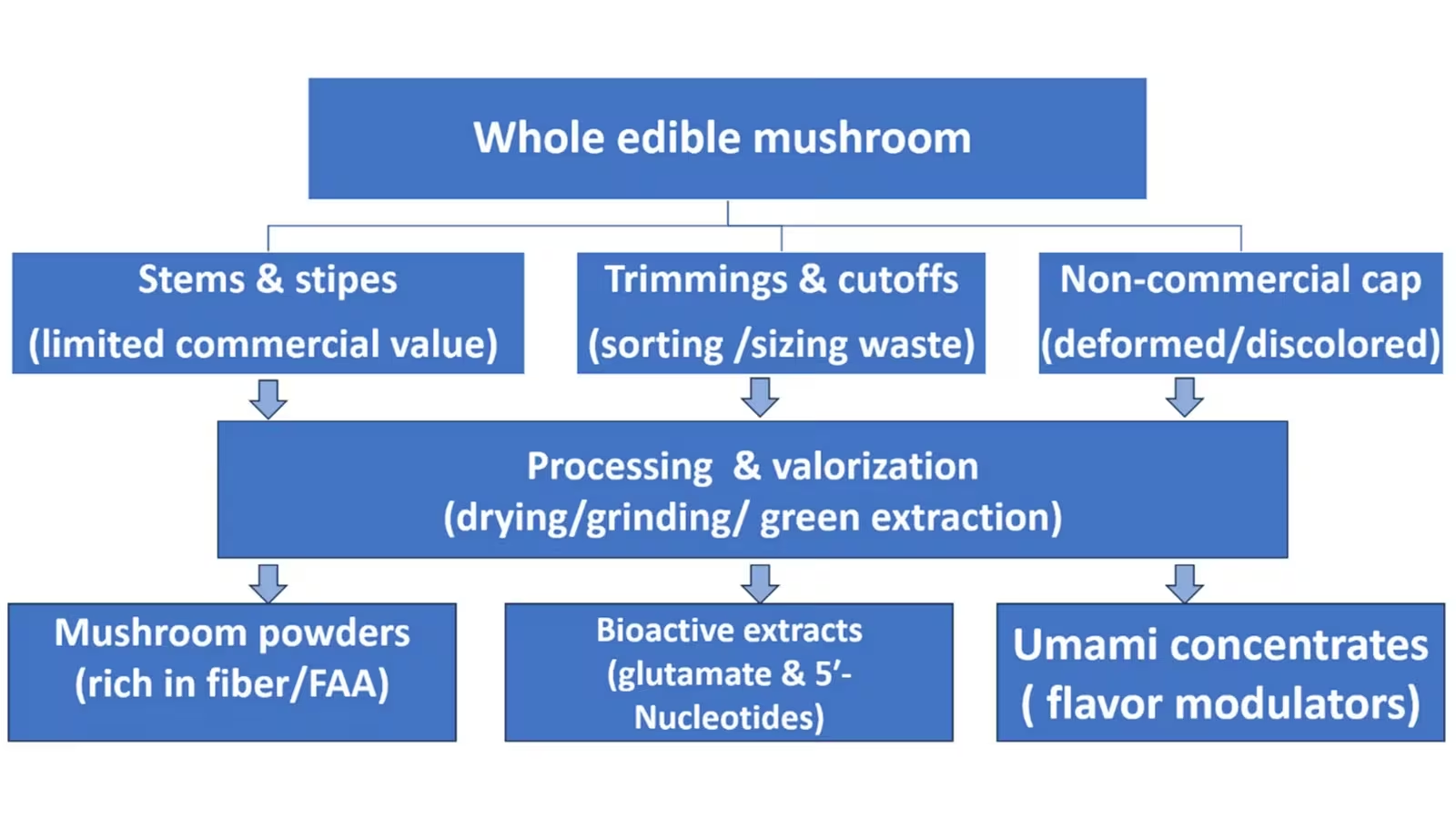
Plant-based foods have emerged as an important choice for many consumers. Although foods formulated from plant-derived raw materials and ingredients can contribute to more sustainable food systems, their broader consumer acceptance continues to be constrained by suboptimal flavour quality compared with products prepared using animal-derived ingredients.
What the research examined
While considerable research has focused on improving the texture, nutritional value, and processing of plant-based foods, recreating the savoury depth characteristic of animal-derived foods remains a persistent challenge. Edible mushroom by-products have attracted increasing attention as sustainable sources of flavour-enhancing compounds; however, their functionality cannot be explained solely by the presence of glutamate or other individual constituents.
What the findings mean
Rather, their sensory effects arise from coordinated interactions among umami-active molecules, receptor-mediated taste mechanisms, food matrix properties, and human perception. This review examines the potential of edible mushroom by-products as natural flavour-enhancing ingredients for plant-based foods. It also reviews evidence on flavour-active composition, the molecular basis of umami perception, glutamate-5'-nucleotide synergism, formulation strategies, sensory evaluation, consumer acceptance, and industrial translation.
Study authors: Edkaidek H, Dahiya D, Nigam PS.. This report is based on the openly licensed abstract and source record and has been formatted for newsroom reading.
Foods (Basel, Switzerland)
https://europepmc.org/articles/PMC13606337This report is prepared from the public source listed above for news and industry-information purposes. Original research, text, trademarks and images remain with their authors and rights holders; open material is used under the licence identified by its source. Rights holders may contact rights@asiafoodtimes.com with evidence of ownership, and verified concerns will be corrected or removed promptly. This article is not investment, legal, medical or nutrition advice.

![Effects of Colchicine Treatment on Bioactive Compounds and Structural Characteristics of the Epidermis and Cortex of Edible Cactus [ Opuntia ficus-indica (L.) Mill.] Cladodes at Different Maturity Stages.](/media/50bd05bc3790beaccba597aebf5834600d29f4db96ee4a7259db469ff512ec16)