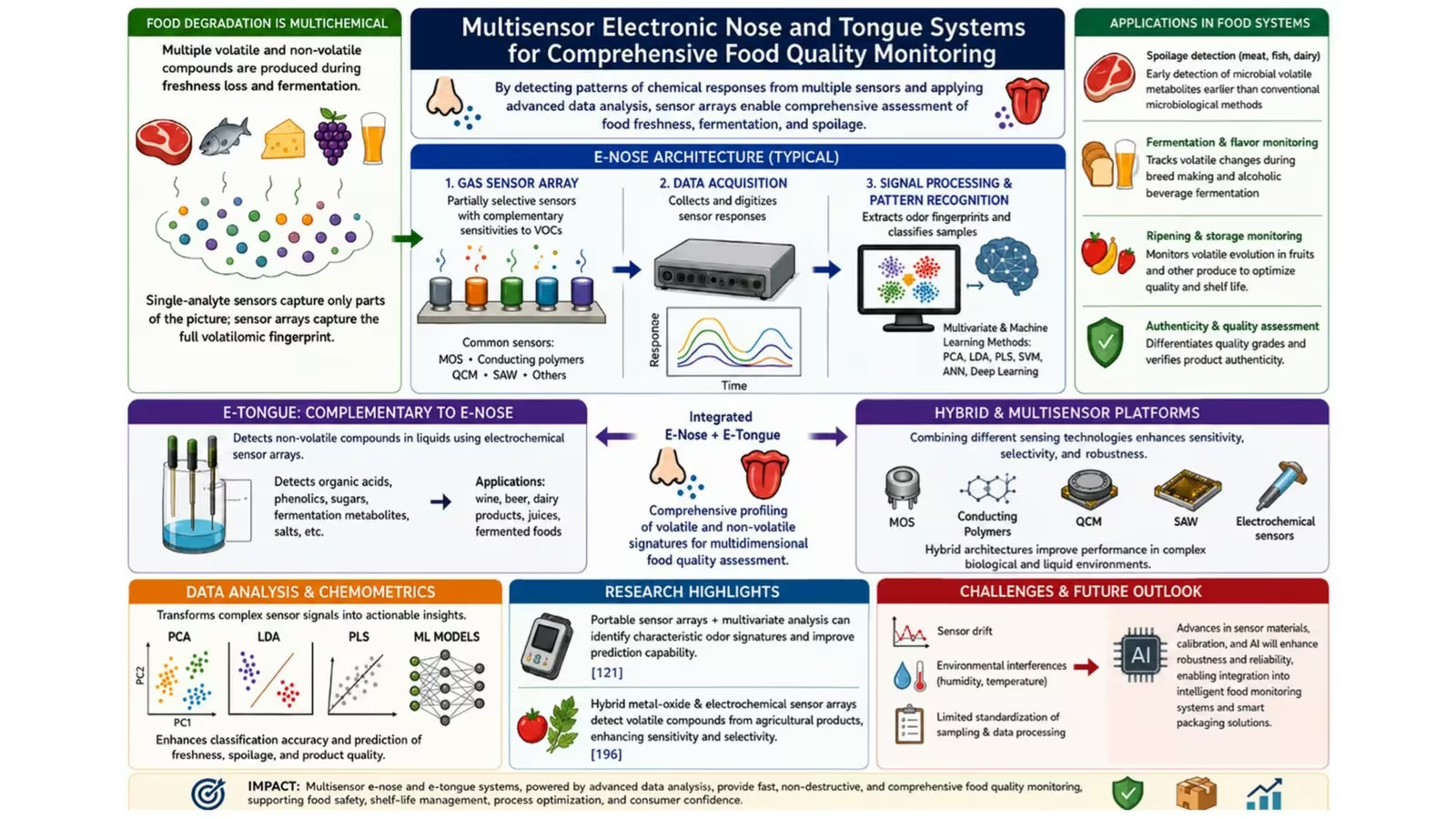
Smart chemical sensors have emerged as promising tools for real-time monitoring of food spoilage in both fermented and non-fermented products. By detecting key spoilage indicators-including biogenic amines, ammonia, hydrogen sulfide, methane, pH variations, and microbial volatile organic compounds (MVOCs)-these systems enable rapid, on-site assessment of food quality, offering a viable alternative to conventional, time-consuming laboratory analyses. Recent advances encompass diverse sensing mechanisms, including chemiresistive platforms based on conducting polymers and MEMS (Microelectromechanical Systems); optical/colorimetric systems using dyes, metal-organic frameworks, and porphyrins; and electrochemical and biosensing approaches employing enzymes, antibodies, aptamers, and whole-cell recognition elements.
What the research examined
These sensors demonstrate high sensitivity (ppb-ppm range), enabling early detection of spoilage before sensory perception or microbiological threshold exceedance. Their applicability has been validated across a wide range of food matrices, including meat, fish, dairy products, vegetables, beverages, and fermented foods. Despite significant progress, key challenges persist, including signal drift, limited specificity, susceptibility to environmental factors such as humidity and temperature, and interference from complex food matrices.
What the findings mean
Furthermore, integration into intelligent packaging requires the development of flexible, food-safe, and regulatory-compliant materials. Emerging approaches that combine sensor arrays with machine learning and MVOC pattern recognition are enhancing predictive accuracy and enabling food classification across commodity types. Overall, smart chemical sensing technologies are rapidly transitioning from laboratory prototypes to practical applications in intelligent packaging and wireless monitoring systems, with ongoing research focused on improving robustness, standardization, and scalability for commercial deployment. This article provides an overview of the topic, drawing on the available bibliography from the last five years and the most-cited scientific databases.
Study authors: Marques-Gomes C, Cosme F, Oliveira I, Gonçalves B, Pinto T, Inês A, Aires A, Gomes R, Afonso S, Vilela A.. This report is based on the openly licensed abstract and source record and has been formatted for newsroom reading.
Sensors (Basel, Switzerland)
https://europepmc.org/articles/PMC13517724This report is prepared from the public source listed above for news and industry-information purposes. Original research, text, trademarks and images remain with their authors and rights holders; open material is used under the licence identified by its source. Rights holders may contact rights@asiafoodtimes.com with evidence of ownership, and verified concerns will be corrected or removed promptly. This article is not investment, legal, medical or nutrition advice.