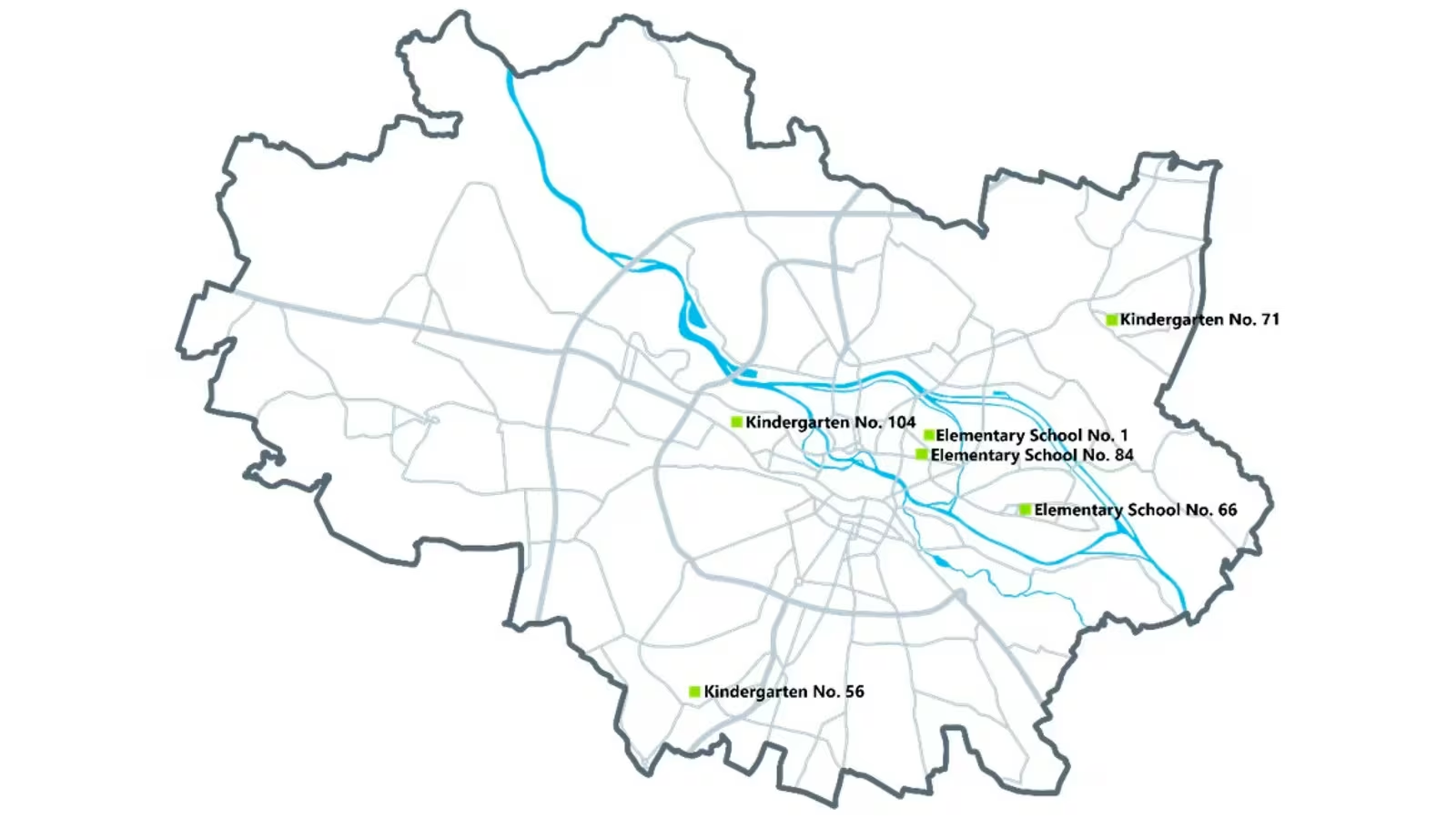
Food is lost and wasted at different points in the food supply chain, causing serious environmental, social and economic implications. School lunches are a significant source of food waste at the consumption stage. This study, undertaken in the framework of the Interreg Central Europe project 'foodCIRCUS', investigates food preparation, consumption, and waste generation in six educational institutions (three primary schools and three kindergartens) in Wrocław, Poland. Monitoring was done during five consecutive days in each institution (October-December 2024), covering food produced and eaten as well as unserved food, serving leftovers, and plate waste for the main lunch components (soup, protein, starch, and vegetables).
What the research examined
The main results give an overall amount of food waste of 236 g/meal planned, with a wastage level of 45%. This is higher than values reported in the literature and higher than the commonly cited global estimate of approximately 30% across the entire food supply chain. Most of the wastage occurred as plate waste (27% of the total food prepared), whereas unserved food constitutes 18%. Primary schools show higher levels of unserved food due to variability in meal uptake, whereas kindergartens show higher plate waste. Vegetables and certain starch-based dishes (groats) have the highest wastage levels.
What the findings mean
It can be concluded that both operational and behavioral factors cause food waste in school canteens. The national nutrition guidelines lead to a consistent overproduction of food in kindergartens and primary schools, both with their own kitchens and served by catering companies. Reduction strategies should focus on behavioral approaches such as nudging or awareness-raising and operational optimization (e.g., improved forecasting and portion control), as well as redistribution approaches for surplus. The national nutrition guidelines should be interpreted and implemented less strictly. Each pupil should be given the chance to eat portions according to the amounts based on the guidelines, but this does not mean that these amounts have to be prepared for all the pupils potentially attending lunch (as for many it is not their only nutrition source).
Study authors: den Boer J, Sobieraj K, Boer ED, Obersteiner G.. This report is based on the openly licensed abstract and source record and has been formatted for newsroom reading.
Foods (Basel, Switzerland)
https://europepmc.org/articles/PMC13565617This report is prepared from the public source listed above for news and industry-information purposes. Original research, text, trademarks and images remain with their authors and rights holders; open material is used under the licence identified by its source. Rights holders may contact rights@asiafoodtimes.com with evidence of ownership, and verified concerns will be corrected or removed promptly. This article is not investment, legal, medical or nutrition advice.