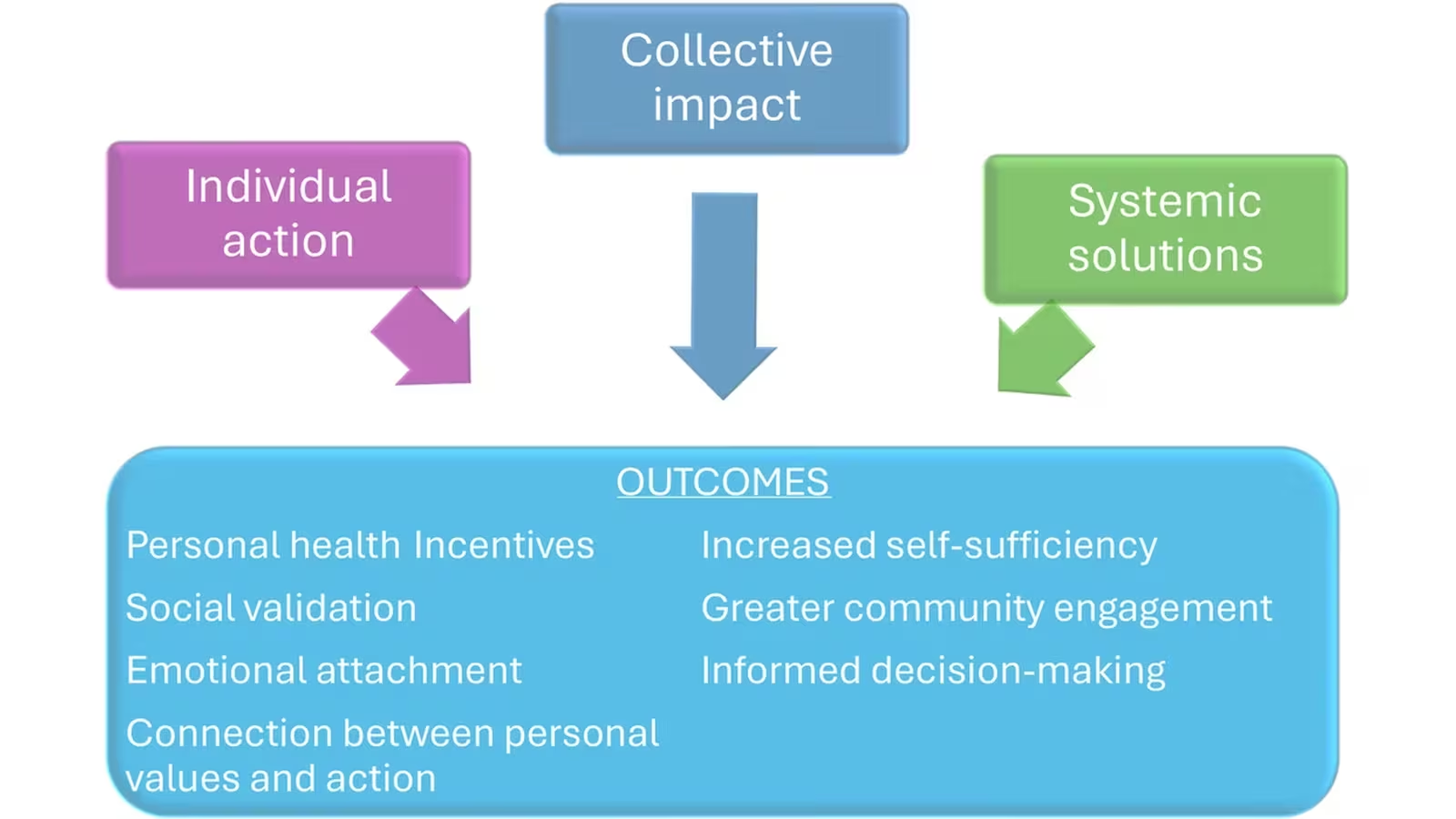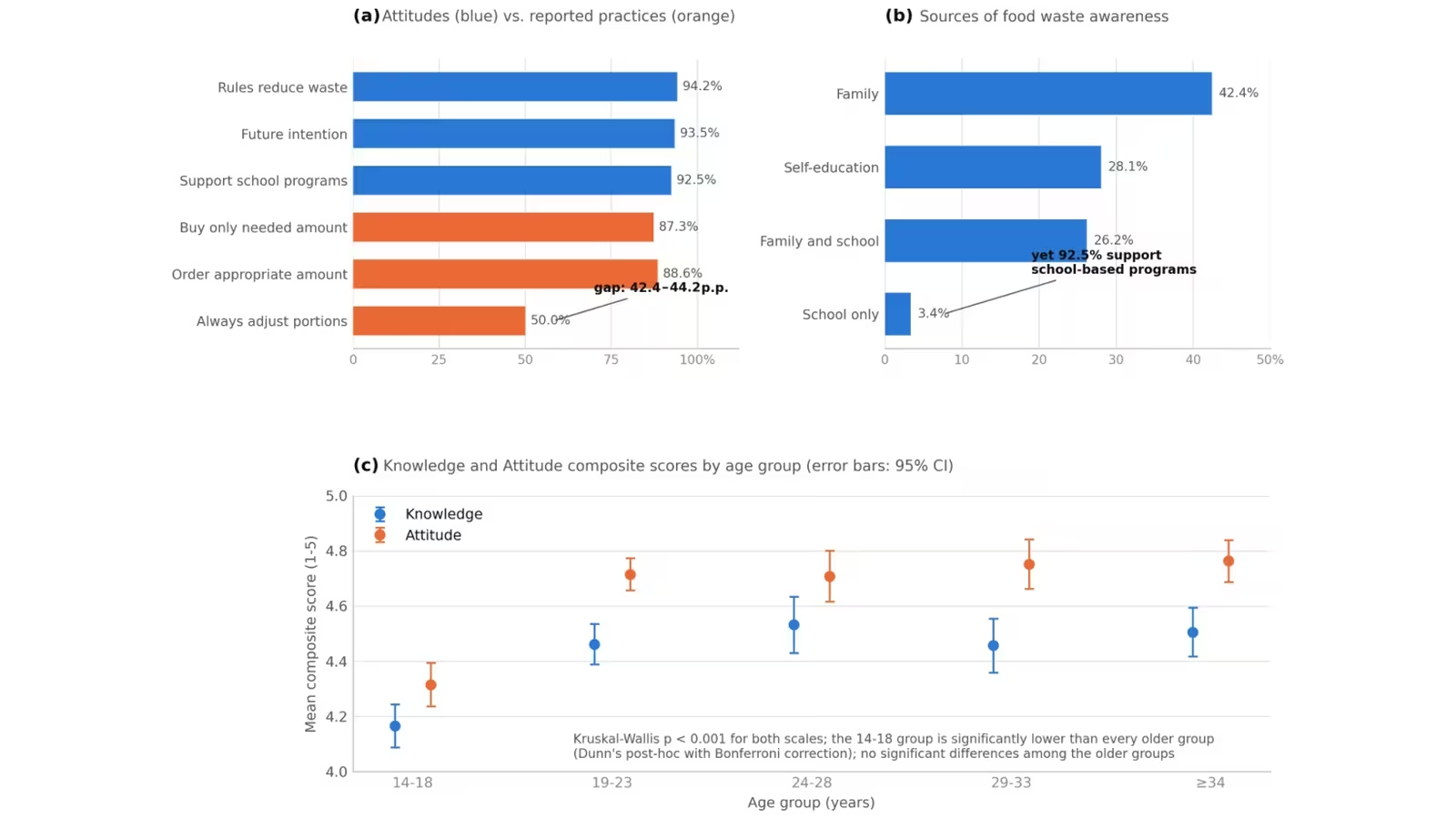
Faced with the urgent challenges of climate change and environmental degradation, governments, and frameworks like the EAT-Lancet Commission advocate for sustainable diets. Yet a persistent gap remains between individuals' intentions to eat sustainably and their actual behavior. Current approaches often attribute this gap to deficits in individual attitudes or motivation. In this paper, we challenge that view.
What the research examined
We introduce the construct of dietary affordances to describe how opportunities for action emerge from the interplay between individuals and their environments. Drawing on ecological psychology and contemporary active inference accounts of perception and action, we formalize dietary affordance as a relative selection weight shaped by three components: pragmatic value V i,c (goal alignment), predictive precision P i,c (enactment reliability), and the policy prior H i,c (accumulated habit strength). Crucially, value and reliability contribute additively to a reduced-form policy score S i,c , with non-linear threshold-like effects arising from the exponential structure of policy selection and normalization across competing options. This implies that without sufficient reliability, high motivation alone may be insufficient to sustain behavior - and that entrenched habits can dominate even when better alternatives are nominally available.
What the findings mean
Within this framework, unsustainable eating is reframed not as an individual failure, but as a predictable response to a misaligned affordance field: for many, the safest, most predictable, and most habitual course of action is to choose foods that undermine climate goals. We argue that closing the intention-behavior gap requires shifting the focus of interventions away from individual consumers and toward the institutions that design and govern food environments. We identify specific leverage points within the food system, including pricing, urban design and social protection, that researchers and policymakers can use to reshape the feasible behavioral policy set, ensuring that sustainable habits are not just intended but practically achievable. By reducing the expected risk and uncertainty of sustainable diets and supporting the formation of sustainable habits, policymakers can align these options with the brain's drive to minimize uncertainty, ensuring that sustainable behavior emerges not through self-regulation, but as the natural outcome of a well-designed system.
Study authors: McIntosh A, Griffiths AR, Brennan A, Young HA.. This report is based on the openly licensed abstract and source record and has been formatted for newsroom reading.
Frontiers in psychology
https://europepmc.org/articles/PMC13503352This report is prepared from the public source listed above for news and industry-information purposes. Original research, text, trademarks and images remain with their authors and rights holders; open material is used under the licence identified by its source. Rights holders may contact rights@asiafoodtimes.com with evidence of ownership, and verified concerns will be corrected or removed promptly. This article is not investment, legal, medical or nutrition advice.