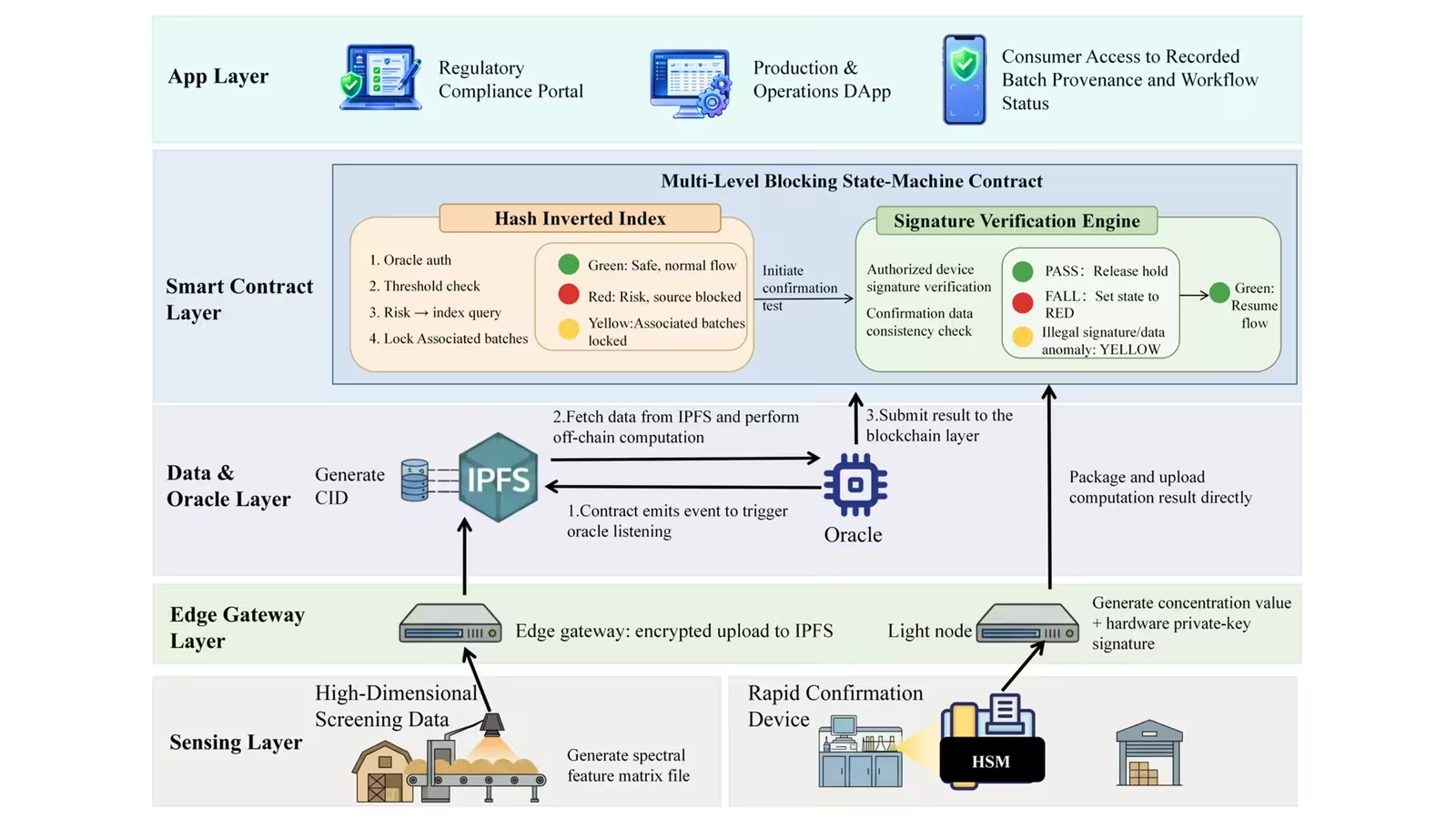
Food-safety systems increasingly need to manage large detection files and externally generated analytical results across multiple organizations while linking these records to batch-level control actions. This study proposes a blockchain-based dual-track mechanism for trusted circulation of food-safety detection data and batch-level risk control, using aflatoxin B1 (AFB1) as the empirical case.
What the research examined
High-dimensional files are stored in InterPlanetary File System (IPFS) and anchored on-chain by content identifiers (CIDs); three authorized oracles use two-of-three matching of detection values and evidence hashes before contract-based state determination. A stage-device-operation inverted index identifies associated batches, while signed second-track confirmations drive GREEN/YELLOW/RED state transitions. Experiments on a four-node Quorum Byzantine Fault Tolerance (QBFT) network used 57 independent HyperPistachio samples with 86.625-mebibyte (MiB) band-interleaved-by-line (BIL) files.
What the findings mean
Real-file access was successfully completed, single-oracle failures were tolerated when two consistent oracle reports remained, and associated-batch query latency increased only from 13.06 to 16.78 ms as fanout rose from 1 to 40. A 115.15 min sustained run maintained consistent states across all four nodes. The study manages externally supplied AFB1 results rather than evaluating analytical AFB1 detection accuracy, and its experimental validation is limited to the AFB1 case.
Study authors: Chen M, Zhao Z, Xu J, Yu J, Cui X, Zhang X.. This report is based on the openly licensed abstract and source record and has been formatted for newsroom reading.
Foods (Basel, Switzerland)
https://europepmc.org/articles/PMC13565445This report is prepared from the public source listed above for news and industry-information purposes. Original research, text, trademarks and images remain with their authors and rights holders; open material is used under the licence identified by its source. Rights holders may contact rights@asiafoodtimes.com with evidence of ownership, and verified concerns will be corrected or removed promptly. This article is not investment, legal, medical or nutrition advice.